Way Back Wednesdays: Lady Saw – “Sycamore Tree”

Good Morning to you! It’s Jacob Braybrooke here, and it’s time for me to get typing up on the blog for this week’s ‘Way Back Wednesday’ flashback, as we revisit the seminal sounds of the past that have been influential to the present, since it’s always my day-to-day pleasure to write up about a different piece of music every day! It has become a rather multi-cultural week on the blog so far, and that lovely trend continues with ‘Sycamore Tree’ by Lady Saw, which was released as a single from her 1997 album, ‘Passion’, which reached the #8 spot on the US Billboard Reggae Top Albums Chart. It, therefore, officially became Saw’s first album to chart. Formerly known as ‘The Queen Of Dancehall’, Lady Saw was a Jamaican vocalist and producer whose career has spanned for two decades, and she holds the distinction of being the first black female DJ to be certified as both a Grammy-winning artist and a Platinum-selling artist. In more recent times, Saw converted to Christianity in late 2015 and announced that she would now identify as “Marion Hall”, and she has began a career in writing Gospel music – which Hall has performed at The White House. Revisit ‘Sycamore Tree’ below.

Ever since the peak of her popularity, Hall has been known for her ‘Slack’ performance style that has been controversial to the authorities in Jamaica, a battle that has also influenced Hall to write protest anthems about freedom of speech and double standards between how vulgarity is perceived in music from male and female Jamaican artists. Hall is also known for her socially conscious lyrics, and one of the biggest examples of this trend was her 1996 track, ‘Condom’, a track that warns young girls about the dangers of unprotected heterosexual sex. She has, therefore, never been afraid to speak her mind with her music, and 1997’s ‘Sycamore Tree’ is another decent portrayal of this attitude. The lyrics are about an obstructive woman who will not participate in oral sex with a love interest, and tries to convince him that she is a more honest person than we’re led to believe, with some occasionally lewd lyrics like “Remember, it was under the Sycamore tree” and “The sun stopped shining for me” that discreetly show the cracks of her true intentions. This style of lyrics are recited underneath her famously high-pitched bass that she was known for frequently producing. Her raw vocals continue to reflect upon one of the most contentious musical topics in her country for a number of decades, but the sound maintains a rather joyful and bright personality, with some light, yet classic Dub toasting and shimmering, percussive rhythms, which turns her assessment of Jamaican sex taboos into a more refreshingly wicked, playful affair. A potent and firmly female-focused effort, the Reggae backing beat is rather catchy, with Hall bragging about a ‘false innocence’ with lines that feel fully aware of her sexuality, such as “Mi a gal wi gi yuh all di wickedest ride”, while also proclaiming lyrics like “a nuh everything mi like” in later sections. On the whole, it’s not something that I would usually choose to listen to, since it’s simply not in my typical wheelhouse of favourite genres, so to speak, but I enjoyed a few minutes of the time that I spent with Saw’s song. The vibe is pretty sexual, but joyously defiant and character-oriented. A seminal salute to her free spirit.

That’s enough of my musical musings for another day, and thank you very much, as always, for reaching the end of the page. I’ll be here to catch up with you once again tomorrow with some more information about, possibly, one of my favourite new albums in recent memory. It is really good, and it takes us to South Korea for some Shoegaze sounds. The young adult artist, however, likes to keep his proverbial cards quite close to his chest. We know very little more than his recording name: Parannoul.

Connect with One Track At A Time:

Facebookhttps://www.facebook.com/OneTrackAtATime/

Twitter: https://twitter.com/OneTrackAtATim1?fbclid=IwAR2demHDssZESnHDMi6gzTGNZJvdS42Ot930CA9Rttw7n4CJ5nvB8VJbWxE

Way Back Wednesdays: Randy Travis – “Forever and Ever, Amen”

His son said “Mommy, I’m gonna love you forever and ever, Amen’. Let’s go Way Back!

Good Morning to you! You’re reading the words of Jacob Braybrooke, and it’s time for me to get typing up for your daily track on the blog, since it’s always my day-to-day pleasure to write up about a different piece of music every day! We’re looking at the sounds of the past that have influenced the present today, and that translates to a scarce Country music appearance from Marshville’s Randy Travis. Travis was a huge star in the 80’s, a pivotal figure in the development of Country music, who had sixteen #1 singles on the Billboard Hot Country Songs Chart. Very tragically, he suffered a Stroke in 2013 that has left him unable to continue singing, but, in his peak time, Travis branched out into other media as a crossover star, appearing in films like the ‘National Treasure’ series and seven episodes of ‘Touched By An Angel’ on TV. He now owns a star on the Hollywood Hall Of Fame, and, in 2016, he was inducted into the Country Music Hall Of Fame. Known as one of the pioneers of the Neo-Traditionalist movement, Travis is highly revered for helping to bring traditional Country music back to mainstream attention. One of his signature tracks is ‘Forever and Ever, Amen’, which sold 5 million copies following it’s release in 1987. Check it out on Vimeo below.

Although Travis’s stroke has severely limited his abilities, since 2017, he’s occasionally been known to add the final ‘Amen’ to live performances or cover versions from other artists, and ‘Forever And Ever, Amen’, remains popular to this day. As recently as February of this year, Ronan Keating and Shania Twain released their own duet version of the classic track for Keating’s eleventh studio album, ‘Twenty Twenty’. It”s impact continues to be felt, then, by it’s romantic and sweet melodies. The vocals find Travis harkening back to his distinctive Baritone vocals that he was known for, where he croons sequences like “As long as old men sit and talk about the weather/As long as old women sit and talk about old men” with his low-pitched harmony. The guitars are the twangiest of twangs, as you would expect, with a melodic rhythm and an upbeat mood that absorbs you deep into the Country genre. Deep to it’s core, the songwriting is about joy in constancy, with platonic verses about loving a woman regardless of changes to their appearance, citing her hair as the main reference, and smooth flirtations where he uses the song itself as back up evidence for reassuring his faithfulness to his wife. The family Wedding scenario of the music video is a picture-esque complement to this. Country music is really not my bread-and-butter pudding by usual standards, and so I think it’s a testament to Travis’s career that he manages to get me quite on-board with this. It’s cheesy and it’s of it’s time, but it’s catchy and uplifting, with lyrics that feel smart and deliver enough substance to click. Overall, it is one of the VERY few tracks that make me interested to explore 80’s Country further.

That’s all I have for today – but I’ll be thanking you for reading my text forever and ever, amen! Tomorrow, we’re going Electronic, with an in-depth look at one of the strongest IDM album releases of the year so far. The artist has made an appearance on the blog before, and is one of the most important new signings to the highly influential Hyperdub club music label that was founded by Kode9 in 2000, originally as a webzine, before it became a label in 2004.

If you really liked what you just read, you can find us on Facebook here: https://www.facebook.com/OneTrackAtATime/. We’re also now on Twitter, so you can check it out and give us a follow here: https://twitter.com/OneTrackAtATim1?fbclid=IwAR2demHDssZESnHDMi6gzTGNZJvdS42Ot930CA9Rttw7n4CJ5nvB8VJbWxE

Easter Sunday 2021 Special: Dolly Parton – “He’s Alive” (1989)

“He is not here, for he has risen, as he said” – He has risen indeed! Easter post time…

Wishing you a Happy Easter – it’s Jacob Braybrooke, and it’s time for me to get typing up for today’s track on the blog, just like always, because it’s always my day-to-day pleasure to write up about a different piece of music every day! No Scuzz Sundays post this week, because I’ve got something Easter themed to share with you instead today to roll with the holiday season. Dolly Parton is an artist who I don’t feel I have to give much introduction for. She’s only probably the most famous Country music star of all time, and so her discography and socio-economic impact is pretty blindingly obvious. “He’s Alive” is a track which was actually written by Worship music icon Don Francisco in 1977, released on his album ‘Forgiven’, but Parton put her own spin on the track for the closing section of her staggering twenty-ninth main album release, ‘White Limozeen’, in 1989. I’m not familiar with that record (Country music isn’t really my thing, as I’m sure that you’ve probably noticed by now), but my research indicates that she aimed to return to the Country roots of her prior work after 1987’s ‘Rainbow’ saw disappointing results. She did so to great success, with the record spending a total of 100 weeks on the US Country Albums chart, earning positive reviews, and it went certified Gold in sales. ‘He’s Alive’ looks at the resurrection of Jesus Christ from Peter’s viewpoint. Last year, Parton shared an acoustic performance of the track to her followers on Instagram, and since arguably not much has changed in the way of lockdown restrictions since then, it still feels punctual today. Let’s check it out below.

“Somebody said the other day, oh, we’ve had a rough week”, “and just think about the rough week that Jesus had, and look how well that turned out for us. I’m going to sing about that” was a lovely way for Parton to introduce her acoustic rendition of the track in the video of her performance above, and ‘He’s Alive’ had previously earned it’s original producer, Don Francisco, similarly rock solid success in the way of two notable Dove music awards following it’s release way-back-when. Parton gets her version off to a bang with her signature voice and some stirring, naturally acoustic guitar chords. Parton balances a noticeably grounded tone with some more profound odes to religious events during the track, with lines like “Looked down into the street, Expecting swords and torches, And the sound of soldiers feet” and “The stone’s been rolled away, And now his body isn’t there” narrates the story of Peter’s revelation of seeing that Jesus’ body had been risen from the tomb on Easter Sunday in a more Spoken Word form. The grand finale of the track sees Parton exclaiming “I believe it, He’s Alive” and “Sweet Jesus” above a slightly more rough guitar rhythm and nothing more, as she celebrates the revelation in unbridled joy. Parton would usually perform the track with a Choir to back her up, but she joked that “there wasn’t enough elbow room” for one last year (and there still isn’t this year…) and so, using nothing more than her acoustic guitar and her natural voice in the solo performance, she does a great job of bringing some religious context to a holiday that is commercially about overpriced chocolate and a longer weekend. It really isn’t “my thing” in the personal opinion sense, but it makes a good reminder for what the strange holiday of Easter has been built upon. Seriously, why have it on a different day every year? It’s to do with the Moon and the Equinox, but just how? Anyways – You go and have a good one.

That’s all for now! I’ll be back tomorrow for another Easter-themed post that is contemporary, and so that makes for a switch-up. Bank Holiday Monday… it looks like I forgot to book it off. I’ll catch you tomorrow then. If you really liked what you just read, why not follow the blog to get notified when every new daily post is up and why not like the Facebook page here?: https://www.facebook.com/OneTrackAtATime/

Today’s Track: Christafari (feat. Makamae Auwae) – “Angels We Have Heard On High”

Don’t ever forget that it all happened Once In Royal David’s City! Time for a new post!

Twas’ the weekend before Christmas! My name is Jacob Braybrooke, and it’s time for me to get writing up all about your daily track on the blog, because it is always my day-to-day pleasure to get virtually typing up about a different piece of music every day! “Angels We Have Heard On High” is a track that I’ve actually been really looking forward to sharing with you all week – but I thought I’d leave it until now because it feels closer to the week of Christmas, and I know that you always want to hear a good one on a Saturday, or, I at least hope so. It comes from Christafari, an 8-piece Christian Reggae-Dub super-group who were put together by Mark Mohr, an ordained Church minister who was born as a Rastafarian, before he became a Christian at the age of 17. Morh also fronts the band. “Angels We Have Heard On High” was originally released back in 2013, from their “Reggae Christmas” album released through Lion Of Zion Entertainment, but it was re-released a year later, along with a new music video. This is a Reggae take on the “Angels We Have Heard On High” French hyym, which tells the story of the birth of baby Jesus from The Gospel Of Luke. Let’s take a listen to it below.

My research indicates that Mark Mohr found an affinity for Reggae music, becoming a grower of Marijuana, in his teens, after a visit to Jamaica in 1986, but his life took a turn for the best, and, after enrolling in Biola University in 1993, he received his ordination in 1997. The video for “Angels We Have Heard On High” is a real Christmas Cracker (Sorry!) and it makes me laugh out loud with the cast of colourful characters who answer their front door to find Christafari and Makamae Auwae singing the carol to them, and I feel that the Thor guy really deserves a special mention, in this post, for his dance moves. As for the song itself, it’s highly joyous and cheerful, with a minimalist vocal production that reminds me of Pentatonix in it’s Acapella influences. A fun Marimba beat and a percussive Jamaican Steel Drum beat form the groovy rhythm, as Auwae sings: “Angels We Have Heard On High/Sweetly singing O’er the Plains/And the mountains in reply/Echoing their joyous strains” on top of a light auto-tune effect that makes her voice sound clear and on-point, but not too artificial and overproduced. A Dub beat is created by Mohr, who adds a rhythmic delivery to “Me say, we give him the glory” and he, in fact, almost creates a Hip-Hop melody. The rest of the group provide some well-spirited vocal harmonies in the background, throughout the song, which are quite subtle and inobtrusive, but the odd “Hey” and the longer notes of the chorus make it feel more ‘Christmassy’ and more seasonal. It’s the cheerful chants of “Gloria, In Excelsis Deo” that gives it an uplifting punch, while the instrumental beats sound very jovial and melodic throughout. The percussion is really crowd-pleasing stuff, and I think the track manages exceptionally well to remind you of the true meaning of Christmas and slightly distract you from the heavy consumerism of the Festival, while still retaining a fun, engaging, upbeat and positive vibe. It also feels very ‘Christmassy’, while providing a nice alternative to the generic tunes from Band Aid or Paul McCartney that you end up hearing ten times a year. If you ask me, this is an absolutely fantastic way to put the “Christ” back into Christmas!

Thank you for reading my latest blog post! As per usual, I’ll be back at it again tomorrow, for a Festive edition of our weekly Scuzz Sundays feature, where we take an in-depth listen to one of the ghosts of Pop-Punk or Emo-Rock’s past, released between the mid-1990’s and the late-2000’s. If you really liked what you just read, why not follow the blog to get notified when every new daily post is up and why not like the Facebook page here?: https://www.facebook.com/OneTrackAtATime/

Today’s Track: Manu Dibango – “Soul Makossa”

Talk about The Lion King, this one is The Founder Of Funk! It’s time for your new post!

Where are you, Sun? Good Morning, I’m Jacob Braybrooke and I’m writing about your daily track on the blog, as per usual, since it’s always my day-to-day pleasure to write up about a different piece of music every day! Manu Dibango was a Cameroonian musician and songwriter who played both the Saxophone and Vibraphone, and he was born to a father of the Yabassi ethnic tribe, and to a mother of the Duala group. Manu Dibango developed his own unique style of music, covering a vast spectrum of traditional African roots music – and he fused them together with a cohesive range of genres – such as Jazz, Afrobeat, Salsa, Samba, Gospel, Reggae and Blues. His biggest hit was 1972’s “Soul Mokassa”. The name is very self-explanatory, it’s simply a fusion of Soul and “Mokassa” – an Urban Cameroonian style of Jazz that blends prominent use of Brass sections with electric Bass rhythms. The refrain has been sampled by Michael Jackson and Rihanna, and the single was a huge influence on Kool & The Gang. It also led Dibango to frequent collaborations with the legendary Fela Kuti. An interesting fact about this track is that only few copies were ever printed, and after widespread airplay on WBLS (the then-most popular Black radio station in the US), over 20 cover versions were recorded by different groups to capitalize on the high, but limited, demand. Sadly, we lost Manu Dibango on 24th March, 2020 after he caught COVID-19, whilst living in France. Let’s get lost in the sounds of “Soul Makossa” below.

Undoubtedly driven by it’s very Saxophone-based grooves, many have claimed “Soul Makossa” to be the very first, true Disco record. There are no traditionally written lyrics to really speak of, but there is a prominent use of Lead Vocals. Manu Dibango’s claim to fame was the “Mamma ko, Mamma ka” rhythm pattern that gets scattered throughout the track, and the “Ma-mako, Ma-ma-Sa, Mako-Make Ssa” choral refrain that played a massive factor in defining the significant sound of a “Disco” record. The vocal refrain gets repeated by a choir in the backing vocals, but the instrumentation clearly has an even more lasting effect. Dibango plays beautifully on the Saxophone, and he is a great arranger. The track gradually adds layer upon layer of bright, warm Saxophone riffs. These are very upbeat and cheerful in tone, but it’s not so much of an uplifting pop sound, as there’s noticeably a tight edge of Jazz in the loose Vibraphone sections and the Congolese rumba sounds, wrapped in ensemble Conga drum patterns and ongoing, mid-tempo Trumpet shifts. He also mixes the catchy vocal patterns together with the key shifts between major and minor, to add new elements of Afrobeat and Ska to the persisting, recurring Brass-centric patterns. This is delightfully repetitive and breezy, with a summery warmth that makes it sound like the musical equivalent of grabbing a can of San Pellegrino (I assure you, this is not sponsored) on a scorching hot day, and just necking it down. Rest In Peace, old friend!

Thank you very much for reading this post! As always, I will be back tomorrow for our first-part (of two) look at the brand new double single by an indie Dream-Pop group from Lund, a city in the South-West province of Sweden. They’ve often been compared to The Postal Service, and the group got their brodcast-related name from a local petrol-station-turned-radio-station-turned-repair shop called “Radioavdelningen”, and giving you the rough translation will ruin the suprise I’ve given to you from these clues! If you really liked what you just read, why not follow the blog to get notified when each new post is up and like the Facebook page here?: https://www.facebook.com/OneTrackAtATime

Today’s Track: Enigma – “Sadeness (Part 1)”

This interesting German-Romanian electronic music producer managed to crack the “Enigma code” of the mainstream singles charts in the 1990’s. It’s time for a new post!

Remember this one? Good Morning to you, my name is Jacob Braybrooke and I’m writing up about your daily track on the blog, since it’s always my day-to-day pleasure to write about a different piece of music every day! It’s a strange sight to behold – a composer managing to have a big chart hit with an ambient chillout track that was built upon Gregorian Chants and tribal Flute sounds, but somehow… before I was even born…. It happened! Enter Enigma, the alias of German-Romanian music composer Micheal Cretu. The inspiration for his experimental project was a product of his desire to make a kind of music that did not obey “the old rules and habits” of commercial pop music, and presented a new form of artistic expression with mystic and experimental components, according to his interview with Melvyn J. Willin. Thus, he produced atmospheric intercultural soundscapes which dabbled in elements of New-Age and Worldbeat. He became a very successful artist for doing so, selling a total of over 70 million records worldwide, and receiving three Grammy Award nominations. He’s still going, having released his eighth ambient LP – “The Fall Of A Rebel Angel” – in 2016. He burst onto the scene with his international hit “Sadeness (Part 1)” in 1990, a track that somehow reached the #1 spot of the singles charts in 24 countries, which includes the UK. Let’s have a listen back to his breakout track below!

I’ve always wanted to join the Gregorian monks, but I never got the chants! There is no denying that Engima’s “Sadeness (Part 1)” is probably the most profoundly odd track to reach #1 in the UK, but I feel there is a nice amount of artistic merit to it, as opposed to it being a ‘fad’, and just a novelty. Starting off with an ominous line of Gregorian monk chants, Cretu gradually adds the layers up to combine the Gothic themes with ambient dance beats that were in the contemporary boom period of the time. Cretu repurposes a sample of the drums in Soul II Soul’s “Keep On Movin'” to create a gentle hip-hop beat, and Cretu combines them with a shimmering Pan-Pipe hook to get a downtempo, sultry groove going. It creates a very multicultural and strange ambient texture, and Cretu expands the idea out with the sound of a woman panting after a breathy line of odd foreign language vocals, paired up with the unexpected, short burst of a guitar solo in the middle. The climax (No pun intended) matches the ongoing Flute melodies with the sequence of more beat-driven synthesizer riffs, and the bizzare Gregorian monk chants bring a full-circle effect to the cerebral, trance-inducing 4-minute duration of ethereal, rich sound effects and dense, world-based instrumentation. The Peruvian flute melodies are the highlight for me, and the combination of strange sounds are quite appealing in a surprising number of ways, such as the seductive vibe of the light female backing vocals and the chemistry the different sections have in creating the visionary style that amounts up to an ambient fantasia. I’m probably just reading a bit too much into it, but it does still sound imaginative, and deeply sensual. The layering is quite solid. Sadly, I have a feeling that – much like the ancient customs of an old Gregorian tribe – it will sadly be forgotten as time wares on, and ‘Chart Pop’ gets more meme-oriented by the second!

Thank you very much for reading this post! I’ll be back tomorrow, as always, with an in-depth listen to the (Pssssst… it’s really bad) brand new single from a Scottish folk-rock band who originally performed the track, “When We Collide”, that The X-Factor winner Matt Cardle had the UK’s Christmas #1 Single with in late 2010. If you really liked what you just read, why not follow the blog to get notified when each new post is up and like the Facebook page here?: https://www.facebook.com/OneTrackAtATime

Today’s Track: The Flaming Lips – “My Religion Is You”

The Flaming Lips are back! Will they leave you burning with desire? It’s new post time!

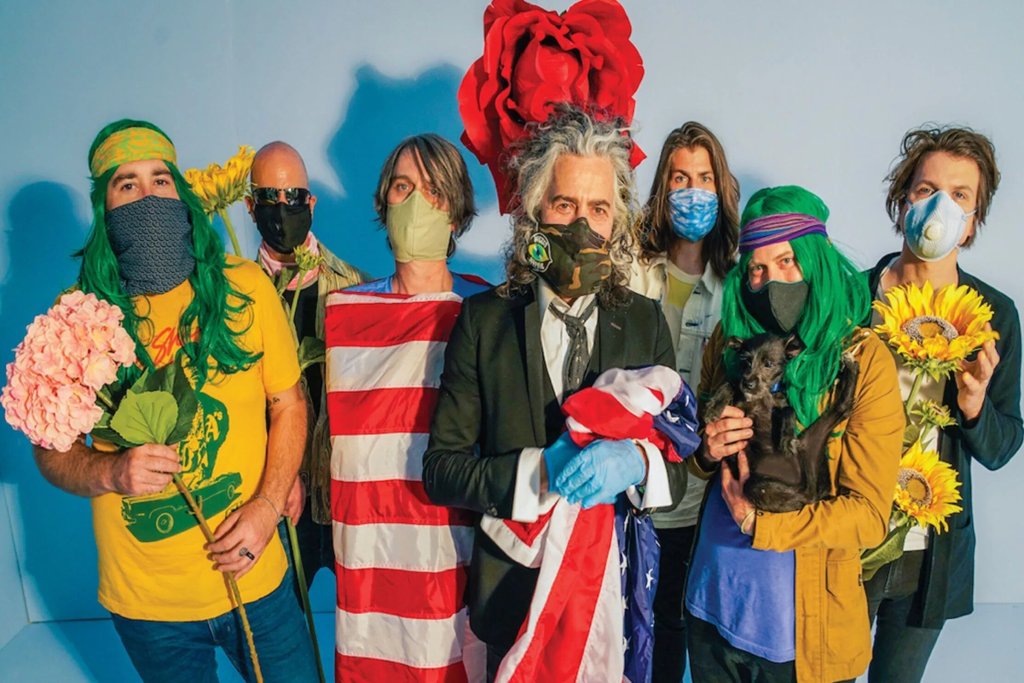
Top O’ The Weekend to you, I’m Jacob Braybrooke and I’m writing about your daily track on the blog, because it is always my day-to-day pleasure to write about a different piece of music every day! Always a band to make a meaningful statement, The Flaming Lips have decided to go patriotic for the sixteenth album of their established, storied career. “American Head” is set for release on September 11, 2020, via Warner Bros. Records in the US and via Bella Union Records in the UK. This upcoming full-length release from the experimental art rock project, who were placed on Q Magazine’s list of the “50 Bands You Need To See Before You Die” poll in 2002, is “based on a feeling”, according to the 7-piece group’s front-man Wayne Coyne, who says: “A feeling that, I think, can only be expressed through music and songs”. He continues: “Mother’s sacrifice, Father’s intensity, Brother’s insanity, Sister’s rebellion… I can’t quite put it into words”… I’ll leave the meaning of that down to you for interpretation. Let’s have a listen to the latest single – “My Religion Is You” – below.

Paired with the chilling music video that sees Wayne Coyne clutching giant Roses next to a prairie bonfire, the band largely explore God above Country as Coyne murmurs through a series of lyrics about religions, in a psych-folk ballad sense, shrugging them off as the downbeat acoustic folk instrumental slowly increases into an Acid-shaded falsetto that slightly resembles Pop. He hums: “Yeah Budda’s cool and you’re no fool, To believe anything, You need” and “If Hari Krishna, Maybe it’s the thing for you, it’s cool”, over the top of sampled string melodies that form in the centre of a psychedelic swing that’s led by a synthesized bass drums, with warm acoustic guitar strums that shape the two verses, but they fade away in the electronic-led chorus. I can detect a sense of unity despite differing beliefs in the post-bridge, where Coyne adds: “If being a Christian is your thing/Then own it, friend”, before a sweeping chorus section where he sings: “I don’t need no religion/You’re all I need/You’re the thing I believe in/Nothing else is true”, layered above soft bass guitar strums, before he concludes: “My religion is you”, repeating the line over the three-line sequence. The track has a mournful, yet warm, tone, and the fairly off-kilter psych-pop instrumentals blend well with the lighter, acoustic guitar-driven opening sections to create a track which, lyrically, is a plea for focused universal love, which is suitable for a time where loads of political groups feel divided, and most of us are still effectively under house arrest. There’s an element of humor to it, with the quirky lyrics to balance the brutality out. Although The Flaming Lips are taking the similar creative approach to The Killers’ “Caution”, where it sounds more like a classic Flaming Lips track than an innovative creative breakthrough for the band, their messages are heartwarming on this track, and it’s a well-structured piece that artfully discusses what it means to believe in love.

Thank you for reading this post! In regards to #BlackLivesMatter, we endorse the peaceful protests on One Track At A Time. Please go and check your local area for good charity causes that help those directly affected by racism and injustice. I’ll be back tomorrow with your brand new weekly edition of Scuzz Sundays the day of the week where we have a look back at an emo-rock or pop-punk classic from between the late 1990’s- mid 2000’s to see if it holds up to modern standards! If you really liked what you just read, why not follow the blog to get notified when each new post is up and like the Facebook page here?: https://www.facebook.com/OneTrackAtATime

Scuzz Sundays: P.O.D. – “Alive”

Pinch, Punch, it’s the last Scuzz Sunday of the month – and a kick for flying so quick!

You know what time it is! Good Morning, Afternoon or Evening – I’m Jacob Braybrooke and I’m writing your new weekly edition of Scuzz Sundays on the blog, because it’s always my day-to-day pleasure to write about a different piece of music every day! Scuzz Sundays is the day where we take a listen back at an emo-rock or pop-punk classic from the late-90’s up to the mid-00’s to see it holds up to this day, named in tribute to the defunct Scuzz music video TV channel. P.O.D. are a band of which I’m surprised I have not covered as part of the weekly feature yet, since the California Nu-Metal 4-piece were huge, critically and commercially, back in the day. Their name is an abbreviation for Payable By Death, and the group are of Christian faith. An interesting fact about P.O.D. is they composed the “619” theme song for the famous Mexican wrestler Rey Mysterio, and they performed the song live at Wrestlemania 22 before Mysterio’s world title match against Randy Orton. “Alive” is one of their most popular tracks taken from their second album “Satellite”, which was released in 2001. The album went on to sell seven million copies worldwide and it was the 26th best-selling album in the US in 2002 after a sustained marketing push, with the album eventually receiving a Triple Platinum certification late that year. The band have gone on to receive three Grammy award nominations and they’ve sold over 12 million records worldwide. Have a listen to the 2006 remaster of ‘Alive’ below.

Ignore the terrible cover artwork, and what you get is what you’ve heard – a nice little pop-driven nu-metal track revolving around the soaring feeling of finding Jesus. The track opens with a strong bass guitar hook, with Sandoval chiming: “Everyday is a new day/I’m thankful for every breath I take”, over the top of an energetic lead guitar riff that repeats over blaring drum notes. The chorus continues the upbeat mood and pop-punk-driven melodies, with Sandoval howling: “I feel so alive, for the very first time, and I think I can fly” over a hook-laden chorus of a heavy lead guitar riff and a symphonic bass guitar solo, mixed in with some more fairly heavy and quickly paced drumming parts, with some backing vocals from Daniels and Curiel to add a gospel-like touch. There is light synth work in the post-bridge, as Sandoval declares: “Now that I know you/Now that I see you, I can never turn my back away” to add variation to the chorus, while keeping the Christian lyric devices intact. I’ve actually found that I like the song more than I thought I would, as it captures a soaring feeling quite well with the high-tempo guitar melodies and the fairly heavy, but still pop-friendly, instrumentation and song structure, as a whole. The chorus gets a bit repetitive towards the end, with a very clear-cut meaning and not a whole load of replay value, along with a certain cheese-level, but I feel these religious themes amount up to a decent level of expression, and the band’s different parts feel cohesive. You can do a lot worse by mainstream standards and the harmonies sound solid. Amen to this one!

Thank you for reading this post! In regards to #BlackLivesMatter, we endorse the peaceful protests on One Track At A Time. Please go and check your local area for good charity causes that help those directly affected by racism and injustice. I’ll be back tomorrow for a second look at an English singer, songwriter and musician who has just released her second album “Kitchen Sink” on the Infectious Music label. If you really liked what you just read, why not follow the blog to get notified when each new post is up and like the Facebook page here?: https://www.facebook.com/OneTrackAtATime