Today’s Track: Ibibio Sound Machine – ‘Got To Be Who U Are’

Whether you’re reading in Surulere, Isale Eko or Ikoyi to Yaba – its time for a new post!
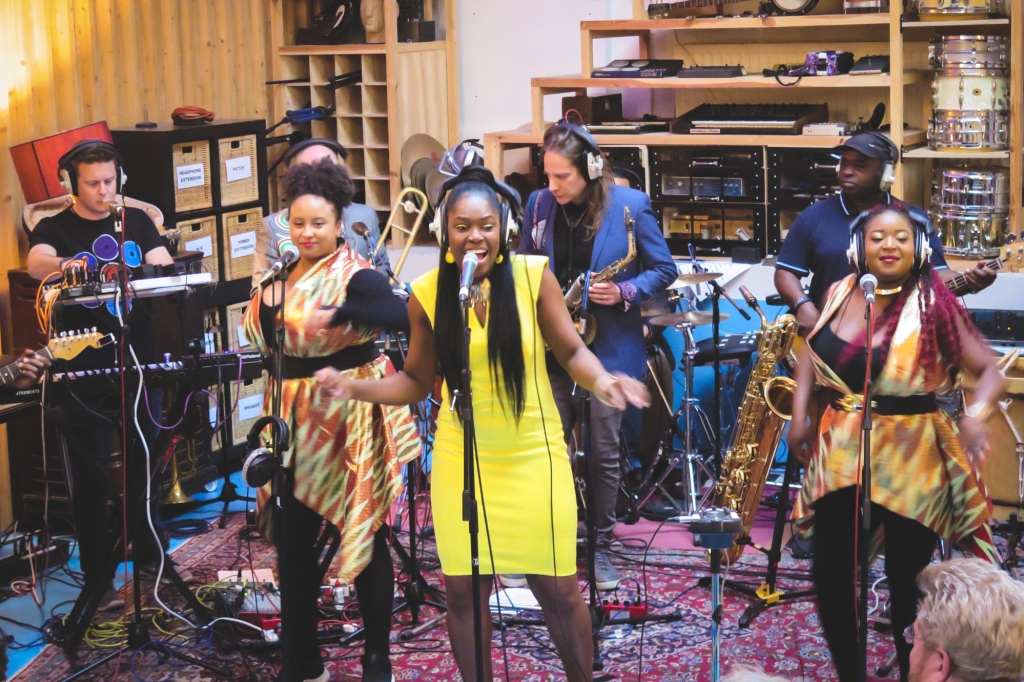
Good Morning to you! I’m Jacob Braybrooke and it used to be my day-to-day pleasure to write up about a different piece of music every day before my adulthood got right in the way! I’ve got a multi-culturally appealing new release to share with you today from an 8-piece group called Ibibio Sound Machine, a contemporary Jazz project that was formed in 2010 by vocalist Eno Williams alongside producers Max Grunhard, Leon Brichard and Benji Bouton with the idea of fusing elements of 70’s jazz, traditional 80’s Afrobeat and modern Drum ‘N’ Bass together. After the first sessions were in the can, they diverted their attention to successfully completing the line-up by adding live musicians to form their initial live band. Since releasing their debut single on Soundway in 2014, the band have released four albums, performed at events such as KEXP’s commemorative World Clash Day in 2019 and collaborated with Alexis Doyle, the frontman of Hot Chip. Their new album – ‘Pull The Rope’ – has been set for a May 3rd release on Merge Records and a live tour in cities such as Cambridge, Birkenhead, Norwich, Leeds, Dublin, Brighton, London, Edinburgh, Nottingham and others will take place during the rest of the year. Seek identity with ‘Got To Be Who U Are’ below.

One signature element of Ibibio’s Sound Machine is how vocalist Eno Williams often sings in different languages because her mother’s native tongue was Ibibio. While she was born in London, she spent most of her childhood in Nigeria with her family. Her mother, in particular, would recount numerous stories concerning folklore to her and Williams has taken inspiration from these memories by crafting lyrics from these sources to use in her music with a modern twist. ‘Got To Be Who U Are’ gets off to a rapturous start by quickly pacing itself through the steps of emphasising the message of the songwriting to incorporating a percussive African mbira chord to the mix and introducing a more uplifting electronic dance tone to the track as the washing synths establish another groovy element. There’s a breakdown in the middle that gets the nightlife vibe across, before repeating the groove to the point of irresistance from the listener. Lyrics like “Down in London to Africa” and “From Surulere to Isale Eko” revolve around the point of how music connects us regardless of location as a result of a simple hook or a tasty instrumental. These name drops are here for a reason too because Surulere, Isale Eko, Ikoyi and Yaba are areas of Nigeria, thus symbolizing the childhood of Williams again as the band have done so articulately across four albums now. Overall, this is a highly enjoyable new release that truly kicks off the marketing machine for the new LP in fine, fiery style by connecting the dots between the band’s diverse music influences and by symbolizing how musical movements unite people across the world and deliver a fundamental connection between these parties with no concern about where they may be. All of the above and a catchy chorus helps too.

Connect With One Track At A Time

Facebook: https://www.facebook.com/OneTrackAtATime/

Twitter: https://www.facebook.com/OneTrackAtATime/

Instagram: https://www.instagram.com/jbraybrookerecords/

Eclectic & Electric (Radio Show – Mixcloud): https://www.mixcloud.com/jacob-braybrooke/

Way Back Wednesdays: Betty Davis – ‘Come Take Me’

Good Morning to you! This is Jacob Braybrooke, and it’s time for us to go retro for ‘Way Back Wednesdays’ on the blog, which helps me to fulfill my goal of writing up about a different piece of music every day! We’re going to be remembering Betty Davis today, a North Carolina-born singer-songwriter who made an erotic string of Afro-Funk, R&B, Soul and rock-tinged Blues albums during the 1970’s. Davis was also known for her sexually provocative lyricism and her flamboyant live performances and, although she never became a household name, she developed a cult following and she has been cited as an influence by contemporary artists like Janelle Monae, Outkast and Jamila Woods, as well as fellow icons like Prince and Grace Jones, for her experimental blend of genres. Davis wrote, arranged and produced all of her own music in her time, a rarity for any female artist, yet alone a Black woman, during her era. She started out as a model, appearing in magazines like Glamour and Seventeen and working with designers, before she became the second wife of the legendary trumpeter Miles Davis. Although their marriage ended after a year due to implied abuse, she personally introduced him to Jimi Hendrix and Cream. She also penned material that got The Commodores signed to Motown Records. Davis sadly left us, aged 77, in February in Homestead, Pensylvania – where she had lived since her childhood – after being diagnosed with cancer a week prior. At one point, Marc Bolan of T-Rex fame encouraged her to write music for herself and she took that advice to heart when her self-titled debut studio album was released in 1973. Originally released by Just Sunshine Records (an upstart label), the record preceded three more solo albums and it got a CD and Vinyl re-issue in 2007 via Light In The Attic Records. She enlisted the help of The Pointer Sisters, Neil Schon, Sylvester and more guest contributors to bring the distinctive record to life and my focus track – ‘Come Take Me’ – was previously an unreleased track until 15 years ago, when it was included on special editions of her self-titled LP. Get a better idea of her sound with the cut below.

Her AllMusic profile describes Betty Davis as “a wildly flamboyant Funk diva with few equals… [who] combined the gritty emotional realism of Tina Turner, the futurist fashion sense of David Bowie and the trend-setting flair of Miles Davis”, according to the website, and so the music world continues to feel the effects of her tragic loss earlier in the year. ‘Come Take Me’ feels like textbook Betty Davis at her finest and most distinct, although the Vinyl re-issue of her entire back catalogue felt as though it was long overdue before the mid-00’s and it had not happened properly yet. That said, if you like the Jazz-tinged Psychedelia of Sly & The Family Stone, the loose Funk influences of Beck’s ‘Midnite Vultures’ era and his unconventional song structures, and the aggressive delivery of 70’s Rock ‘N’ Roll stalwarts, this one is for you. The intro feels a little unorthodox, before the guitar stabs and the wonky bassline comes in, with Davis croaking lyrics about not disrupting the rhythm and treating a lover right albeit with a frenzied and rather crazy attitude. The drums progress nicely throughout the track, starting off with a slow and steady vibe, before controlling the rhythm with a more frantic pace. Davis recites her lyrics with an instructive growl in her voice that complements the unapologetically Funk production of the track, where the warbling vocals carry the wobbling guitars and the trickling fusion of the Motown-esque Bass and Drums to create a rather irresistible groove. It doesn’t sound too out of date and although the songwriting may sound dated, Davis’ imagination of combining then-contemporary Blues-Rock sensibilities with creative, provocative explorations of lust, desire and sexuality in her howling vocals and erotic Jazz/Funk melodies is still there. Davis was a class act who was ahead of her time. The wide world wasn’t ready for her.

That’s all for now! Just to let you know that if you enjoyed today’s tribute to Betty Davis, a re-issue for her final album is also planned to be happening through her label sometimes in 2022. Thank you for checking out my latest post because your support is always highly appreciated, and I’ll be shifting our attention back to new music releases tomorrow with a review of a recent single by a South London-based indie rock band who will be releasing their self-titled debut album via Dan Carey’s Speedy Wunderground label on April 29th. They have performed at festivals including Green Man Festival, SWN Festival in Cardiff, and Fred Perry’s All Our Tomorrow’s live Festival.

Connect with One Track At A Time:

Facebookhttps://www.facebook.com/OneTrackAtATime/

Twitter: https://twitter.com/OneTrackAtATim1?fbclid=IwAR2demHDssZESnHDMi6gzTGNZJvdS42Ot930CA9Rttw7n4CJ5nvB8VJbWxE

Today’s Track: Blue Lab Beats (feat. Fela Kuti, Killbeatz, Kaidi Akinnibi & Poppy Daniels) – ‘Motherland Journey’

Good Afternoon to you! This is Jacob Braybrooke, as usual, and I’m writing fresh off this marathon of a WWE WrestleMania 38 weekend with yet another daily track on the blog, because it’s always my day-to-day pleasure to write up about a different piece of music every day! Pitching their sound as “Jazz-Tronica”, Blue Lab Beats are the North London-based experimental electronic music duo of sampler and producer Namali Kwaken (aka NK-OK) and multi-instrumentalist David Mrkaor (aka Mr DM) who have sat in the additional production seats for their work with artists like Ruby Francis and Age Of Luna, and they have remixed A-list pop culture superstars like Dua Lipa and Rag ‘N’ Bone Man. The follow-up to 2021’s ‘We Will Rise’ EP is the Grammy award-winning and MOBO-nominated musicians’ latest full-length studio album ‘Motherland Journey’ which they released in late February on the legendary Blue Note Records label. The new creative project explores a whole suite of Avant-Jazz, Prog-Jazz, Afro-Funk, Trip Hop, Boom Bap, Northern Soul and Contemporary R&B influences, and it has been described as an “extremely special album” to the duo, who say, “This album took us two-and-a-half-years to finish, or longest process to make an album, but it was so worth it. On this album you’ll hear many fusions of genres and inspirations that we gathered throughout that time frame and especially to work on so many of the songs during the first lockdown, it was a test in itself”, about their recent release. The title track samples Afrobeat activist icon Fela Kuti’s 70’s song ‘Everything Scatter’ and they were given permission by the BLB estate themselves to use that sample. It features guest contributions from Kaidi Akinnibi and Poppy Daniels, while they also travelled to Ghana to record it along with Killbeatz as the producer. Let’s give it a spin.

Much like all of the classic Afrobeat music releases of the 70’s and 80’s, ‘Motherland Journey’ is designed to replicate a communal experience where all of the different influences and the guest contributors are welcome as long as the album’s flow is not disrupted, and the duo also comment, “When we got confirmation to have Fela Kuti’s vocals from his publishers in Nigeria we were honestly blown away that he could really feature on our tracks. An absolute dream come true.”, on Kuti’s featured artist credit for the eclectic track. The track gets off to a bright and warm start immediately, with a quickly established groove formed by the percussive African drums and the prominent Amapiano stabs that pulls apart the standard tropes of their favourite genres with the introduction of the electronic music elements and the sparse guitar melodies to give the classic sound a more modern, updated feel. The pair layer up some of the Trumpet samples and the Afrobeat-tinged backing vocals together to blur the contrasted electronic and organic sounds together occasionally, but the rotating instrumentals and the upbeat textures creates the most dominant impression where we’re witnessing something improvisational and organic from a live house band, like the performers who used to visit Kuti’s shrines at the heart of the Afrobeat cultural movement, who are simply taking to center stage and jamming with one another, creating a timeless feeling as opposed to overtly recycling outdated ideas for simply nostalgic effect. It is not necessarily futuristic, but it feels well-built and structured neatly, with new melodies being bought into the mix to keep the grooves from getting a little tiresome. Overall, ‘Motherland Journey’ is a wonderfully encouraging listen that pulls off a fresh re-boot of it’s ideas by blending the organic percussion of the classic Afrobeat days with the progressive electronic production standards that we’re used to hearing more often from the west. The final results feel quite accessible and engaging to a fairly wide audience, without the feeling of commercialism ever truly dominating their sound in a blatant way. It just feels timeless and eminently buoyant.

That brings us to the end of another uplifting track on the blog, and thank you for continuing to support the site. I’ll be back tomorrow to discuss the new single from an Oxford-born classically trained electronic music producer who has been covered more than once before, since I’m such a huge fan of his work. He’s going to release his first album in a decade this July, and his collaborative single ‘Heartbreak’, which he created with Bonobo, was nominated for this year’s ‘Best Dance/Electronic Recording’ honour at the Grammy awards. The British musician is currently based in Los Angeles.

Connect with One Track At A Time:

Facebookhttps://www.facebook.com/OneTrackAtATime/

Twitter: https://twitter.com/OneTrackAtATim1?fbclid=IwAR2demHDssZESnHDMi6gzTGNZJvdS42Ot930CA9Rttw7n4CJ5nvB8VJbWxE

Today’s Track: Ibibio Sound Machine – ‘Electricity’

Good Morning to you! I am Jacob Braybrooke, and the time has come for me to take you through yet another eclectic variety of sounds with yet another daily track on the blog, because it has always been my day-to-day pleasure to write up about a different piece of music every day! Led by Eno Williams, Ibibio Sound Machine are a ten-piece Afro Jazz collective that she formed with producers Benji Bouton, Leon Brichard and Max Grunhard in 2013 with their idea of combining the unique vocals of the Ibibio language that she used to speak whilst growing up in Nigeria with both traditional West African and more modern electronic music elements. Although currently based in London, Williams sings her lyrics in both English and the Nigerian tongue of Ibibio, and the group are known for taking their musical inspirations from the golden ages of West African Funk and Dance music, modern Post-Rock and Electro-Pop music. Since forming, the band have been interested in creating music which fuses elements of 1990’s Drum & Bass and 1980’s Afrobeat. The band also notably performed at KEXP’s ‘International Clash Day’ event in January 2019, and they have since linked up with Merge Records to issue 2017’s ‘Uyai’ and 2019’s ‘Doko Mien’ for release, with their self-titled debut album being released on Soundway Records in 2014. Their latest single, ‘Electricity’, was premiered by Lauren Laverne during her breakfast show on BBC Radio 6 Music a pair of weeks ago, and it was recorded in Hot Chip’s studio. The group will also be embarking on a UK tour next March and April, including dates in Bath, Birmingham, Worthing, Newcastle, Manchester, London and Leeds. Let’s give it a spin.

Giving her insight into the direction of the new single ‘Electricity’, frontwoman Eno Williams says, “This one started out as an idea to mix Afrobeat with Giorgio Moroder-style synth vibes”, explaining, “The end section with Alfred’s korogo (Ghanian 2-stringed Folk guitar) solo was already there when we got into the studio, but then we added the big kick drum that happens underneath and Owen from Hot Chip’s crazy drum machine percussion at the end, which gave it a futuristic Afro feel when mixed with the more talking drum parts”, in her press statement. More or less doing my job for me with the press release, ‘Electricity’ is lyrically exploring the connection between different people and the power resource. The instrumentation leans towards an 80’s Synth Pop style, with a buoyant bassline and some tight drum melodies undercut by some more grounded, progressive Synth loops courtesy of the drum machine sequences. The pace builds gradually, starting off with mid-tempo beats and purely Synth-based rhythms before introducing a decent amount of variety with sparse Saxophone melodies and short Horn sections towards the middle. A big crescendo of danceable Synth riffs and more cerebral Jazz production creates a burst of energy in the third fourth of the track, before a longer instrumental section of ritualistic chants and quick, extravagant Horn scatterings rounds off the track before we get a final repeat of the chorus. It brings a somewhat new element to the chorus, where Williams talks about love and speaking from the heart as the simple answer to life’s complexities. An uplifting track with a slightly rougher edge that reminds me of Soccer 96’s ethereal Prog-Jazz production during brief intervals, ‘Electricity’ is a single that is lyrically radiant and evidently listenable. A focused and charming return.

That’s all for now! Thank you for reading my latest post, and it is ‘New Album Release Fridays’ tomorrow, meaning that I’ll be guiding you through one of the weekend’s most notable new album releases. This week’s pick gives you a taste of the new posthumous album by a cult favourite Alabama-born singer-songwriter who sadly left us in March. Encompassing a variety of styles including Blues, Rockabilly and Country – you may know him for opening on-tour for The Hives and The White Stripes in 2007.

Connect with One Track At A Time:

Facebookhttps://www.facebook.com/OneTrackAtATime/

Twitter: https://twitter.com/OneTrackAtATim1?fbclid=IwAR2demHDssZESnHDMi6gzTGNZJvdS42Ot930CA9Rttw7n4CJ5nvB8VJbWxE

Way Back Wednesdays: Jimmy Cliff – ‘The Harder They Come’

Good Afternoon to you! This is Jacob Braybrooke, and you’ve come to the right place for a seminal selection of my weekly ‘Way Back Wednesday’ series of classic appraisals, because it’s always been my day-to-day pleasure to write up about a different piece of music every day! Even the most casual audiences of music would have heard some material from Jamaican Ska and Rocksteady multi-instrumentalist, producer, actor and composer Jimmy Cliff before, since he composed iconic tracks like ‘Hakuna Matata’ and ‘Reggae Night’ that have been etched deeply into popular culture. Also known for hits like ‘You Can Get It If You Really Want’ and his cover version of Johnny Nash’s ‘I Can See Clearly Now’ that was used in Disney’s classic ‘Cool Runnings’ film about the first ever Bobsleigh team from Jamaica to enter the Olympic games, Cliff is a crucial component in popularizing genres such as Reggae and Alternative Soul across the world. One of five performers inducted into the ‘Rock and Roll Hall Of Fame’ in 2010, the St. James-born vocalist is the only living reggae musician to hold the Jamaican government’s Order Of Merit, the highest honour that can be granted for his services to performing arts and sciences. ‘The Harder They Come’, the soundtrack album and its titular lead single from the Perry Henzel-directed motion picture of the same name released in 1972, is widely considered to be one of Cliff’s greatest releases. The record peaked at #140 on the US Billboard 200, and, in 2021, the album was deemed to be “culturally, historically or aesthetically significant” by the Library Of Congress and so it has been selected for preservation in the National Recording Registry. Let’s remind ourselves of the iconic title track below.

Voted as the 73rd greatest album of all time by Entertainment Weekly’s editors in July 2013, the soundtrack was a true celebration of Reggae globalization with prominent guest spots from 60’s Jamaican Rocksteady icons like Desmond Dekker, The Maytals and The Melodians. Speaking of the hit title track, Jimmy Cliff recalled in an interview conducted for the Wall Street Journal in 2013, saying, “The lyrics came from my past. I grew up in the church and had always questioned what they were telling me. Like the promise of a Pie in the sky when you die”, elaborating, “I wanted the song to have a church feel and to reflect the environment I grew up in – the underdog fighting all kinds of trickery”, in the text. Like some other songs on the album, ‘The Harder They Come’ appears twice, paralleling both the movie’s core themes and the autobiographical essence of Cliff’s career. It’s placement during the middle of the album gives it an entirely different feel than when it appears as the uplifting, positive closer, and this works well as it is sandwiched between the nostalgic sweetness of The Maytals’ guest track and just prior to the more alarmed warnings of ‘Johnny Too Bad’ shortly afterwards. Following a simple story of a character who is proving his naysayers wrong and overcoming the odds stacked against him, Cliff recites motivational lyrics like “As sure as the sun will shine/I’m gonna get my sure now, what’s mine” and “Between the day you’re born and when you die/They never seem to hear your cry” and acknowledges realistic expectations in sequences like “I keep on fighting for the things I want/Though I know that when you’re dead you can’t” that bring his ambitions to earth at brief intervals. The second verse is a standout, and the vocals emphasize the power of religion and ignoring bad influence upon your personality from the people who doubt your potential. The track still manages to stand out nicely in this modern time by feeling relatively grounded yet still upbeat and cheerful, boasting some optimistic lyrics that don’t shy away from recognizing fault in setting unrealistic targets for yourself. There are a few shades of Calypso, Tropicalia and Belefonte in the Gospel-leaning sounds of the recording, where a collective sequence of backing vocals from a choir lends some assistance to the cinematic atmosphere of the single’s filmic roots. The percussion has some smooth, breezily flowing instrumentation and the inherent excitement of the key Soulful harmonies gets a positive message across. In conclusion, ‘The Harder They Come’ is a down-to-earth, but nonetheless still interesting, Reggae classic that still works well in the present day. The odd Organ chords and the gently quickening Reggae beats are great at supporting Cliff’s optimistic lyrics about his life, but the bleaker moments never feel glossed or sugar-coated over too much. A solid, universal Ska crossover hit.

That brings us to the end of yet another daily post on the blog! Thank you for your support, and I’ll be back tomorrow to review a relaxing, new and entirely Ambient Electronica project from an English-born experimental electronic music producer who has contributed to albums for Brian Eno and Coldplay in his career so far, and he has appeared twice on the blog in different capacities before. His new album, ‘Music For Psychedelic Therapy’, shall finally be releasing on Domino Records next weekend.

Connect with One Track At A Time:

Facebookhttps://www.facebook.com/OneTrackAtATime/

Twitter: https://twitter.com/OneTrackAtATim1?fbclid=IwAR2demHDssZESnHDMi6gzTGNZJvdS42Ot930CA9Rttw7n4CJ5nvB8VJbWxE

Today’s Track: Vanishing Twin – “Phase One Million”

Good Morning to you! You are reading the words of Jacob Braybrooke, and now is the time for me to get typing up for yet another daily track on the blog, because it has always been my day-to-day pleasure to write about a different piece of music every day! I hadn’t heard of Vanishing Twin at all until I spotted ‘Phase One Million’ during a recent episode of The New Music Fix, but my research tells me that the Cathy Lucas-led London-based Psychedelic Pop Quintet are one of the few successful groups from the dwindling UK Psych market over the last half decade or so. Although based in London, their line-up features members from across the globe – from Italy to Japan – and this inspired them to explore their global influences when writing their fourth studio album – ‘Ookii Gekkou’ – during the worldwide lockdown months last year, by exploring shifting strands of Afro-Jazz and blending a melting pot of Afro-Jazz and Shoegaze to create a veritable concoction of sounds for the new record, which is the follow-up to 2019’s ‘The Age Of Immunology’, and it was finally released over the past weekend on Fire Records. The quintet’s sound instantly strikes the ears as a blissful combination between Khruangbin and Stereolab, and, according to Pitchfork, “The group’s cosmopolitan membership initially reflected its mission to synthesize psychedelic traditions around the globe, from Tropicalia to Kosmische Rock”, in their approach to non-traditional Pop-Jazz songwriting. Drummer Valentina Magaletti has previously worked with Bat For Lashes and Gruff Rhys on their Neon Neon project, while you might also know leading lady Lucas as a previous member of Fanfarlo. To promote the new record, Vanishing Twin will also be performing gigs in locations like Birkinhead, Edinburgh and Bristol in the coming weeks. Let’s spin ‘Phase One Million’.

The new album has been described by the group as “The sound of ordinary life under a different set of rules, in a place where it’s always night” in a press release, and the imaginative title of ‘Ookii Gekkou’ translates simply to ‘Big Moonlight’ in Japanese, an imaginative title for a record that is determined not to come across as fanciful, instead opting to go down the Stargazing Jazz route that may also draw comparisons to Air and The Comet Is Coming in terms of detailed sonic composition. ‘Phase One Million’ is a soft and rich single that builds up swiftly from an understated groove into something altogether more assured, with lyrics that glide smoothly between intrigue and meanderings. There’s a clear air of Trip-Hop about it throughout the laidback near 5-minute duration, which finds Afrobeat sparring with Electro-Soul in a way that finds the two wrapping up neatly like a comforting blanket, with ambience and Synths that dip into a slightly 80’s Synth Pop feel at very particular points. The percussion fits the visual theme vividly too, with some woozy Synth sequences and a hushed Cowbell melody that gently pulls us through to the end of the track with a confident ease. A set of poetic lyrics like “Lightning striking in the same place twice” and “We are looking for a sign” are contemplating brief ideas of nature and discovery with a light meander, as if we’re travelling through different locales at a brisk, yet otherwise relaxed, pace. It feels accessible in a peculiar way, and it certainly makes me think of acts like Portishead and the type of bands that Oklahoma label Colemine Records would usually promote in how the soothing elements of Disco and Afrobeat mould together in a generous Jazz dressing. In conclusion, ‘Phase One Million’ is an excellent single because it sounds laidback and easy to listen to, while never quite feeling bland due to the slightly more psychedelic and haunting tones that hold the different influences together tidily, and so there is a decent amount of variety to keep the repetitive soundscape from outstaying its welcome. An eclectic, cute, soft Pop hit.

That brings us to the bottom of the page for another day, and thank you for joining me on this journey. I’ll be back for a slice of something retro tomorrow with our weekly ‘Way Back Wednesdays’ selection, where we’ll be rediscovering a 70’s British Folk star who I came across on a recent installment of Cherry Red Records Radio. Her debut album was produced by the famous late BBC Radio 1 host John Peel, and she performed alongside other Art-Folk and Alternative Rock luminaries of the time like David Bowie and Nick Drake in her time on the festival circuit too. In 1974, she was voted as the fifth most popular female singer in that year’s Melody Maker readers poll.

Connect with One Track At A Time:

Facebookhttps://www.facebook.com/OneTrackAtATime/

Twitter: https://twitter.com/OneTrackAtATim1?fbclid=IwAR2demHDssZESnHDMi6gzTGNZJvdS42Ot930CA9Rttw7n4CJ5nvB8VJbWxE