Scuzz Sundays: Korn – “Freak On A Leash”

All I have got to say to you is: Da-boom-na-da-noom-na-na-me-na. It’s Scuzz Sunday!
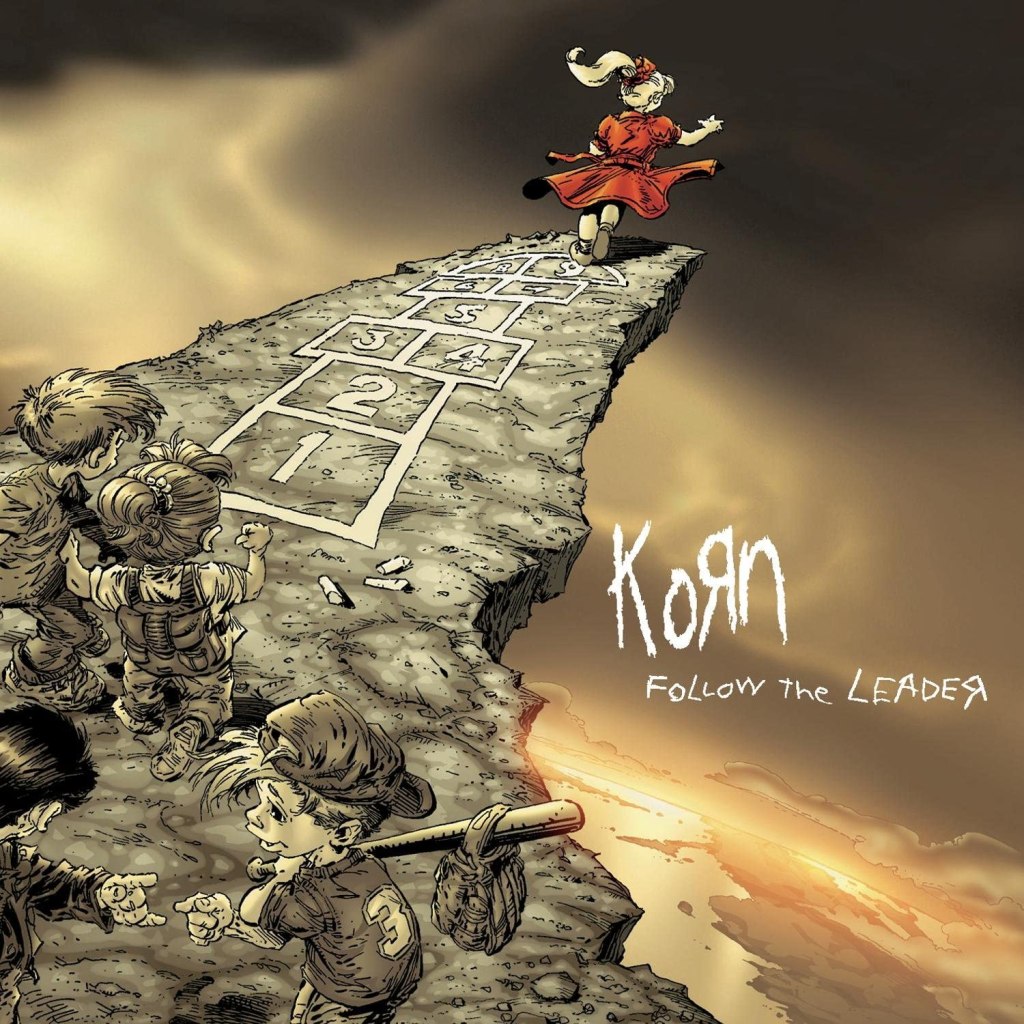
Good Morning to you – my name is Jacob Braybrooke, and it’s time for another entry into our weekly Scuzz Sundays feature on the blog, because it’s always my day-to-day pleasure to write about a different piece of music every day! The last seven days have really flown by, and it’s already time for us to revisit a classic from the Emo-Rock and Pop-Punk genres from the late-90’s to the mid 00’s to see how they hold up, named in honor of the long-lost Scuzz TV channel. Korn’s “Freak On A Leash” was released over 20 years ago, and the track had got to #24 in the UK Singles Chart. Released from the California-bred Nu Metal band Korn, this was the lead single from their third studio LP, “Follow The Leader”, which has been certified as 5X Platinum by the RIAA of the US. Although the album was their first not to be produced by Ross Robinson, with that mantle being taken up by the duo of Steve Thompson and Toby Wright instead, it peaked at the #1 spot on four charts, and it sold over 14 million units worldwide, thus remaining to be Korn’s most commercially-oriented album. In fact, this single is most notable for it’s music video in particular, where the lines between computer animation and live performance were blurred. The video itself garnered wins and nominations for both the Grammy Awards and the MTV Video Music Awards, and it’s twinned to the ‘Family Values Tour’ of the LP. Let’s mosh to “Freak On A Leash” below.

One fact that you might not know about Korn’s “Freak On A Leash” is that Korn once included an instrumental section of the track which they used to call the “noisy guitar break”, but this interlude had been edited out by Korn, as per their fans request of removal, yet it had still managed to hit #6 on the Billboard Alternative Songs Chart and #10 on the Mainstream Rock Songs chart in the US. With a simple “Boom-na-da-noom-na-na-ne-ma”, a crossover hit was born. Don’t get them wrong, “Freak On A Leash” is still a distorted and aggressive track, as dissonant guitar breaks mesh with rapid drum beats to craft the heavy, angry tone. The lyrics are opened by a grunge-driven Synth line and a delayed pedal effect to the bass guitar, as “Something takes a part of me” and “Every time I start to believe/Something’s raped and taken from me” are crooned in a low pitched delivery by vocalist Jonathan Davies. The harsh distortion of his voice, later on, leads to a more anthemic guitar riff and a line of static noise, which is submerged under heavy reverb effects. The structure is quite well-narrated, with the distortion effects signaling for stadium-sized rock instrumentation, and the lighter verses implying a more internalized quality. The iconic refrain is screeched by Williamson, and it is met by an unusual mix of scatting and psychedelia. The breakdown has a more darker and melodic feel to it, and the chorus is your typical state of Nu-Metal affairs, as the high guitar notes in the build-up lead to an explosive lead guitar hook that pays off nicely. The vocals are pretty nonsensical and the experimentation is daft, but the backing track is creative and the unusual vocal breakdown is still memorable – whether that is for better or worse. To conclude, although the track is undeniably dated, you could get a lot worse. The vocals break the immersion for me a little too much for me, but the instrumentation is well-paced. Silly – but it is heavy, it’s crazy, and it’s a bit catchy. Boom-na-da-noom-na-na-ne-ma!

That’s all I have got for your Alternative Metal wrap-up for this week! Scuzz Sundays will be back at the usual time again next week. Before we get to that point – we need to ring in the new month. Join me again tomorrow as we turn to a familiar face – who we have previously covered on the blog – to review a piece of his work from his latest EP, which was released back in September via Friends Of Jagjaguwar. This electronic producer has been played on 168 episodes of programmes on NTS Radio, where he used to host a weekly radio show. If you really liked what you just read, why not follow the blog to get notified when every new daily post is up and why not like the Facebook page here?: https://www.facebook.com/OneTrackAtATime/

Way Back Wednesdays: AIR – “Kelly Watch The Stars”

Stephen Hawking is great at Air Guitar – he has solid String theory. Let’s go Way Back!

Good Afternoon to you – my name is Jacob Braybrooke, and it’s time for me to get typing up about this week’s pre-2000’s track for “Way Back Wednesdays”, because it’s always my day-to-day pleasure to get writing to you about a different piece of music every day! This week, I’m going to take you ‘Way Back’ to 1998… with “Kelly Watch The Stars”, the second highest-charting UK single to come from the French ambient pop duo, Air. This French electronic music duo are perhaps best known for “Sexy Boy”, which really managed to cross the lines between mainstream-friendly and alternative music appeal rather well, and the album that spawned both of these tracks – “Moon Safari” – went down as a classic of the downtempo music style when it was released back in 1998, via Virgin Records. These days, the Versailles-based duo of Nicolas Godin and Jean-Benoît Dunckel are still going strong, with festival appearances and rumors of a retirement circulating for within the new year. I believe that Air were heavily influenced by David Bowie, Lou Reed and Iggy Pop – and this track in particular reminds me of Daft Punk in it’s robotic electronic textures, and it’s strangely accessible Pop sounds. Air are a quietly very successful act, and I’ve only recently tucked into their discography – with reported sales of 386,000 copies for “Moon Safari” in the US – at time of writing. Check out “Kelly Watch The Stars” below.

“Moon Safari” went down as a classic album for the duo – with lush space-pop explorations and a heartening range of instrumental tracks garnering praise for the producers – and, in 2008, to mark the 10th anniversary of the record’s original release, it was re-packaged with a re-release that included a printed book, a DVD short film documentary about the duo, and an extra CD of live performances, along with some remixes of their old, classic tunes. For me, “Kelly Watch The Stars” sets up a Chic and Shiny theme, where visions of surreal fashion imagery and retro car drives with sunglasses in a Cadillac on a hot summer’s 70’s day flood to my mind – these imaginary pictures being supported by the dream-like sequences of the music video. The single manages to sound created in a time period between 80’s retro electronics and future, robotically enhanced instrumentals, with the two ideas feeling bizarrely commonplace. The four lyrics of “Kelly Watch The Stars” are continually layered above repetitive French synth grooves and the use of a Vocoder to give the music a strutting Funk feel. Combined, the mixing of the laidback bass guitar riffs and the syncopated keyboard riffs feel playful and have a bright tone, while the scatterings of Acoustically driven sounds give things a more Cosmic and sophisticated setting. Just over 20 years later – it still manages to sound original, high-tech and old-school at the same time. I think the Synth grooves may get tedious after a while, but I really enjoy the European dance touches and the surrealist, robotic vocals. It’s certainly more of a head-nodder, with a just-about-Pop style that is just pleasant – and free of nonsense.

Thank you for joining me – on the “Moon Safari” to Way Back When. Meet me down the road again tomorrow, as we look to the future instead, with an in-depth look at a recent single from an up-and-coming Australian Folk/Country singer-songwriter who I can see huge potential within. You may know her for her work as a part of the band Phantastic Ferniture, and she’s released two solo albums following this period of her career. If you really liked what you just read, why not follow the blog to get notified when every new daily post is up and why not like the Facebook page here?: https://www.facebook.com/OneTrackAtATime/

Scuzz Sundays: Deftones – “My Own Summer (Shove It)”

You don’t hear Deftones, or a heavier band, in the media very often. It’s Scuzz Sunday!

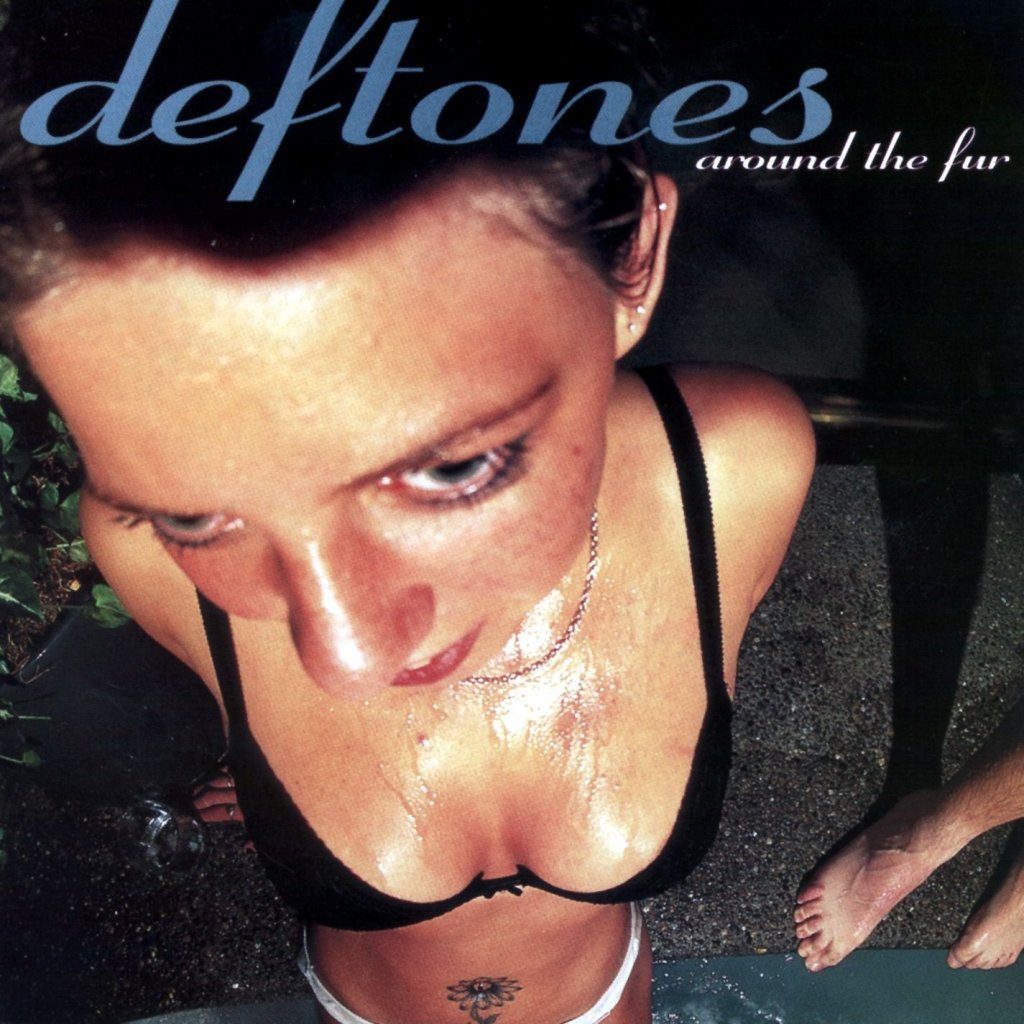
Good Afternoon to you – I’m Jacob Braybrooke, and we’ve finally reached the end of the week – where we pay our debts to the dead Scuzz TV channel with a stroll down the cemetery of Emo-Rock and Pop-Punk releases, between the years of the late-1990’s and the mid-2000’s, to see if life is still kicking beneath their graves in the modern day. That’s a lovely thought, isn’t it? Deftones are a surviving name of the era, who some critics have credited as being “The Radiohead Of Metal” for their continued experimentation within the Alternative Metal and Prog-Rock genres. They’ve certainly become associated with “Cool Emo” music, and they have since gone on record to sell over 10 million albums worldwide, after their formation in Sacramento, California in 1998. The Nu-Metal heavyweights are still going on strong, with their latest album being 2020’s “Ohms”, a record which received widespread critical acclaim from the music press. “My Own Summer (Shove It)” was released during, arguably, their height of fame, in 1997. A single from their second LP, “Around The Fur”, this track got to #29 in the UK Singles Chart. Via the Warner Vault, you can watch the original video below.

The first international hit for the now 5-piece group, “My Own Summer (Shove It)”, gained further mainstream exposure for the Sacramento natives through it’s licensed use on the soundtrack of the cinematic masterpiece “The Matrix”. The album was a success too – with positive reviews and sales success. After being certified as Gold by the RIAA in 1999, it eventually went Platinum in 2001. Chino Moreno alters his lead vocals between a minimalist, whispered vocal delivery and an aggressive, loud pitch. Bold lyrics like: “I think God is moving it’s tongue, There’s no crowd in the streets, and no sun” and “Hey you, big star/Tell me when it’s over” hit hard, while the shouted delivery of “Shove it aside” in the post-bridge remove the melodic undercurrents of the anthemic lead guitar riffs and the pounding drums, which add a bleak and somber quality to the more brooding and calculated pace of the two slowly progressing verses. It has got it’s influences rooted firmly within Prog-Metal and Nu-Metal, and if you ask me, the bulky bass guitar chords make for a rather unusual sound for a radio chart hit. Nevertheless, I think that it struck a chord with audiences because it grabbed their attention with it’s unusual production work, and they felt like a fresh addition to the genre that was trundling along without Nirvana or Guns ‘N’ Roses. Overall, I think it’s probably quite difficult to recommend if you are part of the mainstream audience, but it’s interesting for people who typically listen to Metal or are more familiar with the Nu Metal style already. Though I prefer System Of A Down, it’s still characteristically unique, and it cannot be disputed for the success it enjoyed.

Thank you for checking out my latest blog post! It’s back to the daily drill tomorrow (and another day closer to my looming assessment deadlines) with another track from the archives of 2020. This next one comes from an emerging, energetic UK punk rock group who are originally from Cardiff, and they’ve been signed up to Clwb Creative Records. They are currently set to perform a live set at the FOCUS Wales 2021 live music event, so I’ve got my fingers crossed for that to go ahead. If you really liked what you just read, why not follow the blog to get notified when every new daily post is up and why not like the Facebook page here?: https://www.facebook.com/OneTrackAtATime/

Scuzz Sundays: Nirvana – “Heart-Shaped Box”

I was going to put a bad joke about Nirvana here – but Nevermind. It’s Scuzz Sunday!

Let’s make up for the lack of notable new releases with a “big name” post! I’m Jacob Braybrooke, and it’s time for a new weekly addition to our Scuzz Sundays canon, the time of the week where we listen back to an Emo-Rock or a Pop-Punk relic, which was released between the late-1990’s and the mid-2000’s, all in the name of the defunct Scuzz TV channel, to see if they can hold up to quality in the modern day. “Heart-Shaped Box” was released in 1993, and so it perhaps falls a little before this window. However, it was taken from the last album to ever be released by Nirvana, and Scuzz TV continually played re-runs of Nirvana’s music videos back in the day, and so I’m counting it. I also did not want to go for the most glaringly obvious example of their work – in “Smells Like Teen Spirit”. “Heart-Shaped Box” was the promotional single from their third album, “In Utero”, which was the follow-up LP to the world-famous “Nevermind”, of 1991 fame. The band, including Kurt Cobain, Krist Novoselic and the now-Foo Fighter Dave Grohl, wanted to push “both of the extremes” of their sound for “In Utero”, an album which Kurt Cobain conceded was not as “one-dimensional as Nevermind”. Of course, the group had become a mainstream cultural phenomenon at the time, so the pressure was on for them to deliver the goods on the difficult sequel album. You still can’t walk down any high street in the UK without seeing anyone wearing the smiley Nirvana logo T-shirt, and although I’m not as obsessive about them as their fandom are, it still strikes me to see that Cobain’s trio are still having an influence on modern Rock music and popular music culture. “Heart-Shaped Box” was still a feather in the cap of Nirvana – with a #5 spot on the UK Singles Charts, and further critical acclaim for the music video – which won the Grammy award for “Best Alternative Video” in 1994. Sadly, it was also notable for becoming the last track that Cobain performed live – in Munich, Gemany in 1994 – before his death by suicide later that year. You can still see the Anton Corbijn-directed music video for the track below.

One common misconception about “Heart-Shaped Box” is that the lyrics were influenced by his marriage with Courtney Love – the female lead vocalist of Hole – but as noted in Michael Azerrad’s book, “Come As You Are”, in 1992, the idea came directly from a Heart-Shaped box full of possessions that Love had given to him, with further production ideas throwing around a wholly different title for the track – “Heart-Shaped Coffin”. In any case, “Heart-Shaped Box” attributed to further widespread attention for Cobain’s gang – with the album of “In Utero” having been certified as a 5-time Platinum-selling album, with sales of over 15 million units worldwide. “Heart-Shaped Box” – much like all of the other tracks you’d find on “In Utero” – was intentionally made to feel sharp-edged, and much less polished than the production of tracks like “Smells Like Teen Spirit” and “Come As You Are” from “Nevermind”. It also references a sexual experience with a romantic partner to a pretty explicit degree – as Cobain wails: “Throw down your umbilical noose, so I can climb right back”, to the sound of Noise-Rock guitar chords and feedback-drenched bass guitar riffs that sound pretty jarring, but in a good way, since they sell seething barrages of emotion and retreating Pop-Punk elements in the case of the songwriting. Every verse is supported by a softer backing of frayed vocals and tense progression, with a somewhat laidback delivery of the vocals building tension among the slowly ascending instrumentation. “I got a new complaint, Forever in your debt to your priceless advice” raises the tempo of the chorus, and the angry personality of the vocals. The overall sound manages to become driven by emotional outbursts and reflective songwriting, with a deft lyricism that dynamically changes the instrumentation based on the shifting moods of Cobain’s vocals, with a verse that captures a subtle and raw side to Nirvana’s stardom, mixed with a heavy and abrasive sound that seems more rooted in Nirvana’s grunge roots and the sounds they would likely have explored in their early days. This is hard-hitting – yet rewarding – material.

That is all for today – a new entry of Scuzz Sundays will arrive at the same time next week. Until then, why not join me again tomorrow? We’re going to be continuing to explore a Punk and Grunge direction, as we take an in-depth listen to the most recent single to come from the most promising youngster Post-Punk group to come from Liverpool – even though I’m not too sure what the competition of that niche and specific category will be. If you really liked what you just read, why not follow the blog to get notified when every new daily post is up and why not like the Facebook page here?: https://www.facebook.com/OneTrackAtATime/

Way Back Wednesdays: Digable Planets – “Rebirth Of Slick (Cool Like Dat)”

As Booker T would have said around that time – Can you dig it, Sucka? New Post time!

Good Morning to you, I’m Jacob Braybrooke, and I’m here to – you guessed it! – get typing up your daily track on the blog, since it’s always my day-to-day pleasure to write up about a different piece of music every day. Never mind the “Rebirth Of Slick” – it’s the “Birth of a New Era” here on the blog today – because this is my first entry in a brand new weekly feature. “Way Back Wednesdays” (…See what I did there?) is a new weekly entry where, each Wednesday, we take an in-depth look back at an influential cut or a rarity, that was released pre-2000. I feel this is just a decent way to get more broader, classic music thrown into the mix, to go along with all of my new release-based output that runs on the blog throughout a typical week. Digable Planets was the brainchild of Ishmael Butler, Craig Irving and “Ladybug Mecca” Marianna during the 1980’s and 90’s, a trio of Hip-Hop chic who you could label under the umbrella of “Boom Bap” Hip-Hop artists like A Tribe Called Quest, Public Enemy and Nas, who were emerging in contemporary rap culture of the time. Interestingly, they never set out to be a “Jazz-Rap” group – they simply made use of Jazz-infused samples and using the resources that were available for them to use, being as creative as their composition practices would allow by experimenting with the tools at their disposal. “Rebirth Of Slick (Cool Like Dat)” was their first single, and it became the lead single of their debut LP, “Reachin’ (A New Refutation of Time and Space)”, released in 1993 via Pendulum. The track got to #15 in the US Billboard Hot 100 charts, and it was certified as Gold by the RIAA shortly after, with the sales figure of 500,000 units. Thanks to today’s tech – You can still check out the music video below.

Although the track was never intended to be a “Hit” – It still earned the group the Grammy Award for Best Rap Performance by a Duo or Group in 1994. Sadly, it seems that it was not really meant to last for Digable Planets. Their second album, “Blowout Comb” – released in 1994 – failed to match the success of their original LP effort, leaving the group to follow their own paths and begin their own seperate projects, although there have been a few notable reunions in the decades since. Nonetheless, “Rebirth Of Slick (Cool Like Dat)” would have been an impossible development in Experimental Hip-Hop and Sample-Delia at the time, even if Ishmael Butler likes to now record his own left-field Funk music under the alias of “Shabazz Palaces” in these trying times. It was anchored from a sample of the 1979 track “Stretching” by Art Blakey & The Jazz Messengers, whereby the trio interlace fragmented Trumpet breaks and smart, catchy Acid Synth rhythms. Butler raps about childhood and the political awareness of underground hip-hop records in the first verse, while Marianna raps about the feel of unity that it encourages in the second verse, and Irving jumps in with a verse on the expression of ethnicity through hip-hop culture at the end. The “Cool Like Dat” refrain changes to “Chill Like Dat” and “I’m Peace Like Dat” throughout the process, and the combined “We Jazz Like Dat/We Freak Like That” hook at the end sets a table for the trio’s lofty musical ambitions. The sound is confident and polished – with vintage Saxophone riffs and light-hearted dribbles of Acid Synths crafting a satisfying, mid-tempo Jazz-Aura aesthetic, which has been created uniquely through sampled materials. The “Boom Bap” production feels less aggressive on this release, in juxtaposition with their peers of the time. However, it creates an atmosphere of “Slickness” and “Cool” that makes it an enjoyable listen – due to a relaxing Lounge-Jazz vibe, and it still remains to be the chemistry of the three musicians that makes it work – and so it jostles happily through the spectrum of Hip-Hop self-aggrandization.

Thank you for taking the time out of your day to read my exciting, new post! As always – you can join me for more of the same tomorrow, where we’ll be taking an in-depth look at a more recent release that you may have missed throughout the last year. We’re going into Electronic/IDM territory tomorrow, with a single from a San Francisco-based producer who is often compared to the likes of Boards Of Canada and Ulrich Schnauss in the ways that he merges natural sounds with synth beats. You may also know him as ISO50 for his graphic design and photography work. If you really liked what you just read, why not follow the blog to get notified when every new daily post is up and why not like the Facebook page here?: https://www.facebook.com/OneTrackAtATime/
Today’s Track: Shonen Knife – “Space Christmas”

Peace on Earth, but Joy to the cosmic galaxy. It’s time for a new post!

Great tidings we bring – I am Jacob Braybrooke and I’m here to fulfill my daily duties to type up about today’s track on the blog, because it’s always my day-to-day pleasure to write up about a different piece of music every day! One again, I’m using my smartphone to write today’s post, so I offer my apologies if the format isn’t as neat as I usually like to make it, but I quite enjoyed using this device yesterday actually. Shonen Knife’s “Space Christmas” is the subject of your latest Festive track on the blog this year. Shonen Knife are a Garage-Punk trio from Osaka, Japan who, although changing their line-up’s through the years frequently, have been going for almost the past 40 years now. Heavily influenced by their love of The Ramones (They once performed as a tribute band to them, named The Osaka Ramones), the Japanese Alternative Rock trio are a fresh Avant-Rock take on the 60’s Bubblegum girl bands of old, rooted firmly in DIY Punk aesthetics and quirky, if simple, songwriting tactics. “Space Christmas” was originally released in 1992 as the lead single from the “A Shonen Knife Christmas For You” four-track EP, which was released via Rockville, but it has since been re-issued a bunch of times, most notably on “The Birds & The B-Sides”, a compilation of B-sides, cover versions, live releases, reworked tracks and just other rare material, released via Virgin Records in 1996. Let’s blast off with them to “Space Christmas” down below.

The trio have been credited a lot for opening up the international Post-Punk scene to a lot of more diverse, Asian rock groups to find critical and commercial success in the music industry, hence adding some much-needed international spice to the blossoming genre at the time. “Space Christmas” was released in their prime, and it’s not hard to tell, with the gleeful enthusiasm of their personalities merging with the unrepelled guitar work as Yamano chants: “Merry, Merry Christmas” over the top of the frantic guitar strumming. The vocals have an innocent sound, as she happily sings: “I’m waiting for Santa Claus/He’s riding on a bison sleigh/I’m waiting for Christmas gifts/I want a space ship” above the cheerful sleigh bell melodies and the jovial Pop-Punk instrumentation. It has playfully bad English in it’s lyricism and an unbridled drumming signature within its arsenal, as an undeniably “Bubblegum” Pop sound beams through the amusing vocals to a Punk-in-it’s-prime guitar edge. Lines like “I want to go to Pluto/I want to go with you/I bring Space food/They are Marshmellow, and Ice Cream” really emphasize this sound, although I hate to use the term “Bubblegum” for this because it implies cheap and disposable. It’s going to put a smile on your face though and the intentionally unpolished production will definitely contribute to your enjoyment. It moves beyond ancient Indie Pop, while also providing a good alternative to the same old tracks from Wham, Mariah Carey and Chris Rea that you may be sick of hearing already this year. Sweet, melodic fun.

Thank you for reading my new blog post! As per usual, I’ll be back at it again tomorrow, but to save me from bombarding you with Christmas music all of the time, we’re going to listen to an older track from earlier in the year together. This next one comes from an American Hip-Hop duo based in Seattle who received over ten million views on YouTube for their viral single, “Come Correct”. If you really liked what you just read, why not follow the blog to get notified when every new daily post is up and why not like the Facebook page here?: https://www.facebook.com/OneTrackAtATime/

Scuzz Sundays: White Zombie – “More Human Than Human”

In your head, In your head – is gonna be White Zombie… Zombie… It’s Scuzz Sunday!

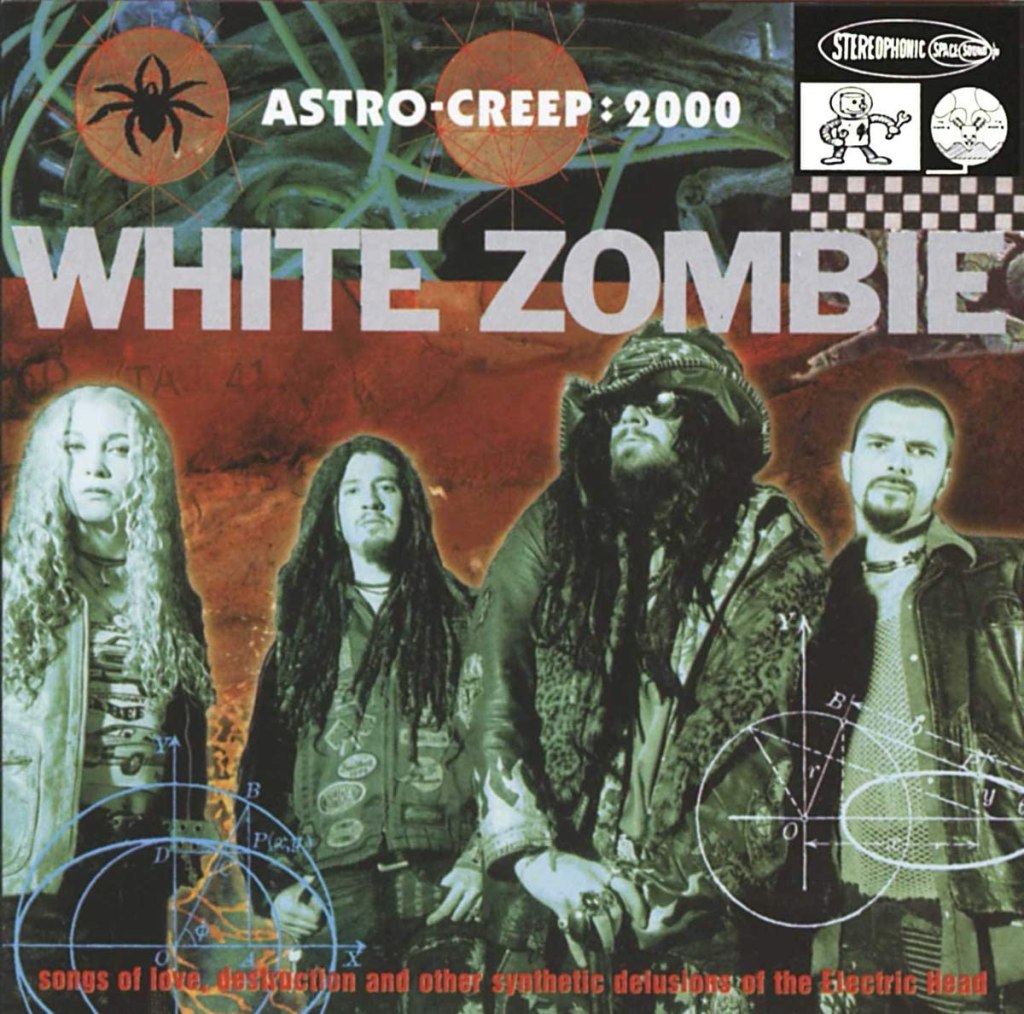
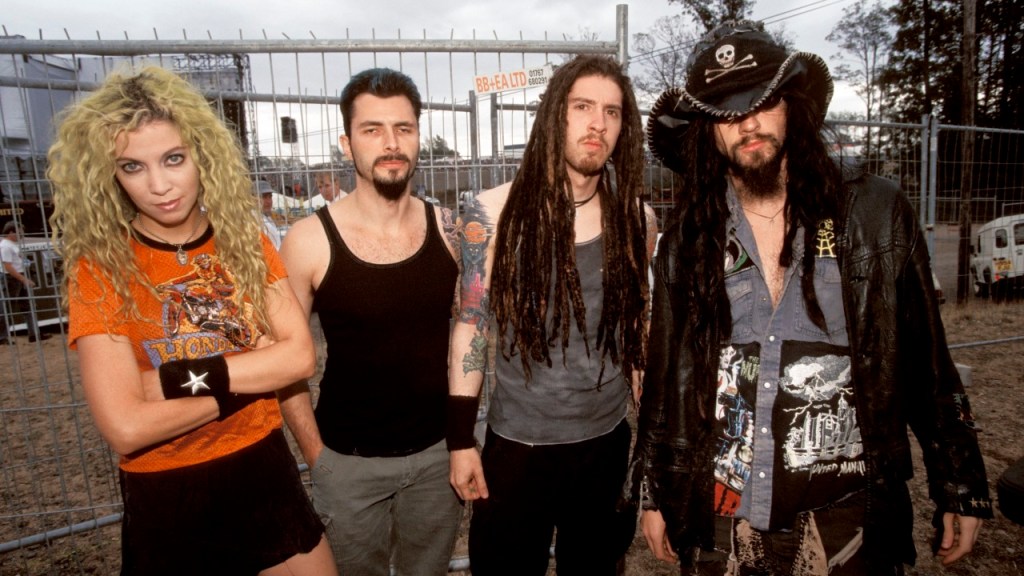
Good Evening to you – I’m Jacob Braybrooke, and it’s finally time for me to get typing up about your new entry in our weekly Scuzz Sundays series, where I take you back to the Emo-Rock and Pop-Punk movements of the late 1990’s, up through to the mid-2000’s, with an ancient gem that I’ve dug out from that era of rock, named in tribute to the now-defunct Scuzz TV channel from my childhood years. It’s almost time to cap off 2020 – and this is going to be our last regular installment of the ongoing series until the new year of 2021, because we are getting more festive with the theme from next week onwards. Last, but not least, we have White Zombie – the trailblazing NYC-based Alternative Metal group most famously comprised of the rock goddess Sean Yseult, the lead guitarist Jay Yuenger, the drummer John Tempesta, and – of course – their frontman, Rob Zombie – who has since gone on to direct a wealth of B-movie horror flicks. Although disbanding in 1998, the band were still ranked highly at #56 of VH1’s “100 Greatest Artists of Hard Rock” list that was published in 2006. “More Human Than Human” was one of their signature tracks – and it was included on the group’s fourth and, what proved to be, their final album – with the shortened title of “Astro-Creep 2000”, which was released in 1995 by Geffen Records. It landed the 4-piece group their most commercially successful album – reaching #6 on the US Billboard Top 200 albums chart, which was a really successful feat for an Alternative Heavy Metal record at the time. A few interesting facts about the track is that it features a repeated Slide Guitar figure, which is more commonly used in Blues music. Moreover, Zombie sampled the moaning vocal effects in the intro from “Cafe Flesh”, a Post-Apocalyptic pornography movie, of all items. Let’s hear the results of this below.

“More Human Than Human” quickly became White Zombie’s most recognizable single in their storied career, earning the band their second Grammy Award nomination for Best Metal Performance, and being ranked on PopMatters’ list of “The 10 Best Alternative Metal Singles Of The 1990’s” list. The title of the track, as well as the lyrics themselves, also derive from the Phillip K. Dick poem “Do Androids Dream Of Electric Sheep”, as Zombie wanted to infuse more elements of Sci-Fi Horror and Industrial rock themes into the band’s output for the LP. It was the single that tipped Rob Zombie over the edge to the mainstream of American radio, built around the toe-tapping Funk guitar rhythm that evokes qualities of Groove Metal. After the electronic intro with the witty sample, we get into the consistent Sliding guitar riff that forms the melodic basis of the track. Rob Zombie has a distorted vocal style, and he sings; “More Human Than Human” repeatedly over the top of the steady guitar instrumentation, with bass guitar riffs that are chugging along to the delayed pedal effects and the undertones of Post-Grunge. Zombie also proclaims the likes of “I am the Jigsaw man” and “I am the ripper man” above the crushing drum patterns and the Whammy-accentuated guitar work with a snarling vocal delivery that makes it a good fit for every over-the-top action flick that came out in the late-90’s. The vocals are pretty difficult to decipher and there’s not really a great deal of substance to them, but it’s the laidback Funk sensibilities and the Hip Hop-inspired placement of the quick samples that made the track stand out amongst the pack since there’s a decent amount of varied influences going into the composition. This lives up to it’s status as an, albeit cheesy, 90’s classic. It’s great to end our feature on a high this year.

Thank you for reading my latest blog post! As usual – I’ll be back tomorrow – although it will be a pre-written one since I’m making the travels back to my non-university home for the festive period tomorrow. There are only ever so many hours in a day, after all! I’m going to continue to shout about a certain Kansas-based singer and songwriter who describes herself as a “Girl who makes music in her living room”. If you really liked what you just read, why not follow the blog to get notified when every new daily post is up and why not like the Facebook page here?: https://www.facebook.com/OneTrackAtATime/

Today’s Track: Boards Of Canada – “An Eagle In Your Mind” (1998)

David Attenborough would be all over this bird of nature! It’s time for a new blog post!

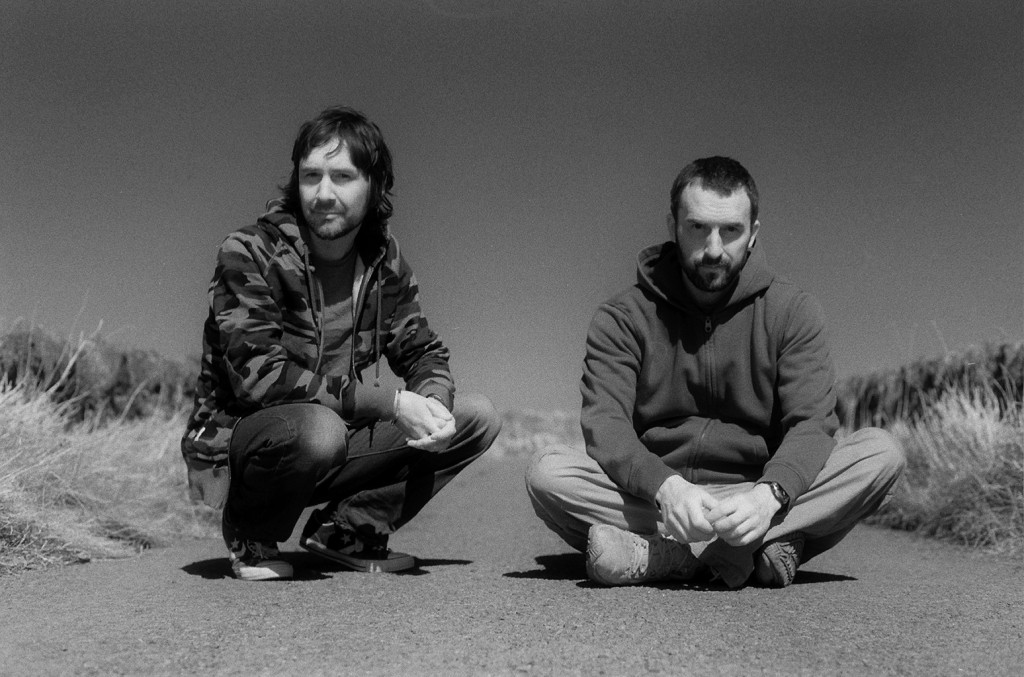
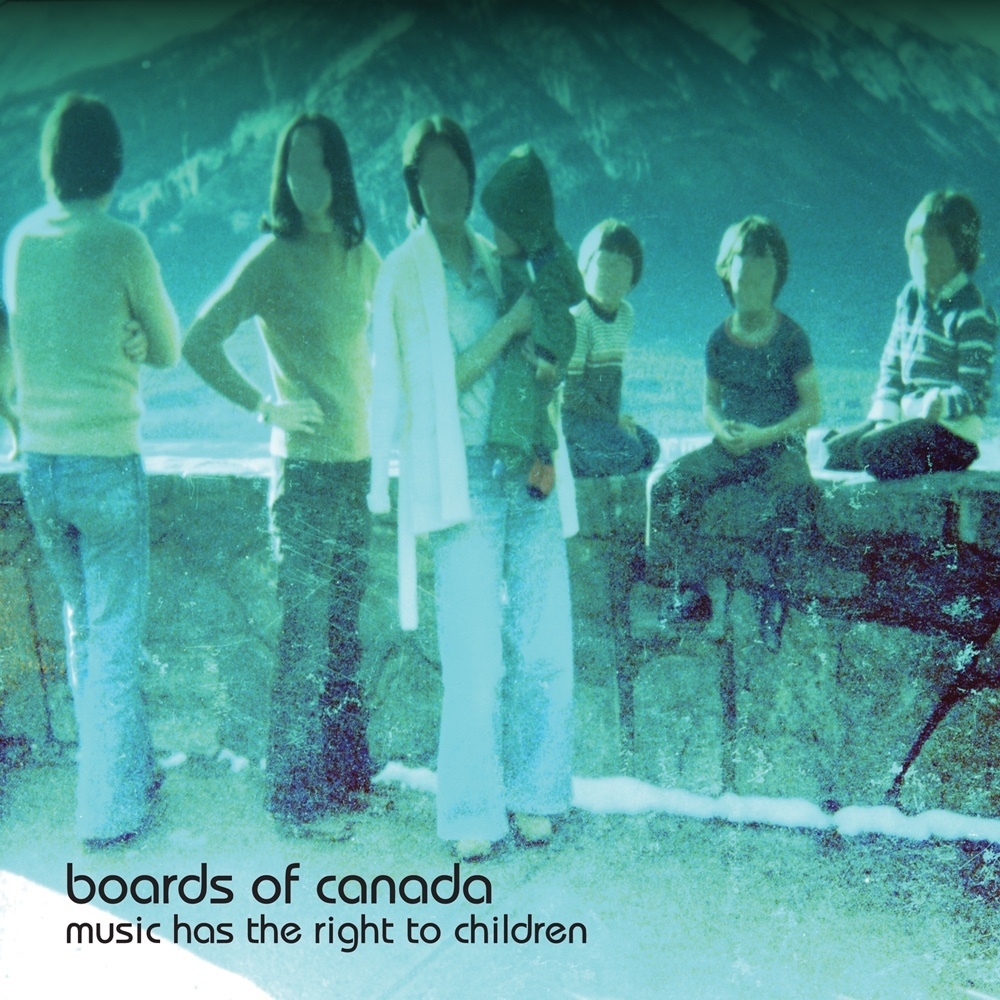
Good Morning to you! My name is Jacob Braybrooke, and it’s time for me to repay my promise of typing up about your daily track on the blog today, as it’s always my day-to-day pleasure to write up about a different piece of music every day! An interesting classic IDM record that I’ve been listening to over the last few weeks is “Music Has The Right To Children”, an ambient record from 1998 which was self-produced by Boards Of Canada, a Scottish electronic music duo, on the Warp Records label. The piece of material went down as a landmark in electronic music work, and it has appeared on many best-ever lists from music publications like Pitchfork and Mojo. While the bulk of electronic music sprawls from Industrial and futuristic technology from urban environments – the intriguing case of Boards Of Canada is that the duo grew up in a very small urban community in Scotland, where they have since remained very reclusive from their fanbase, hardly ever taking part in any press interviews or live performances. For “Music Has The Right To Children”, the brothers of Marcus Eoin and Mike Sandison decided to create experimental sounds from outdated analogue software and samples taken from 1970’s public broadcasting children’s programmes to invoke themes of early childhood, nostalgia and nature. The duo have shrouded themselves in secrecy, and started making music by sending Casettes of their work to their friends and family. Let’s see a fan-made video for “An Eagle In Your Mind” below.

Fan-made videos have played a significant factor in keeping the Boards Of Canada’s fanbase active over the years, with long gaps of years between the subsequent album releases, and the band managed to pull off an elaborate “Easter Egg Hunt” in the highly-anticipated marketing push towards 2013’s “Tomorrow’s Harvest”, but that’s another story for another day. “An Eagle In Your Mind” is the third cut on the track listing for “Music Has The Right To Children”, and it perfectly sums up the basic key elements of the album, for my two cents. As you’ve probably noticed, it’s not really a track that is very accessible from a dancing point-of-view – despite being labelled as an “IDM” release. Instead, we’re given some meditative textures and peculiar sounds that feel rooted in degraded synthesizer hardware and 1970’s-inspired Hip-Hop break-beats. The track begins with a slowly fading synth line that soon washes over the top of a scratching, downtempo turntable beat sample. The sound, although entirely instrumental, manages to feel very rich and fresh because it sounds emotionally mature and hallucinatory, to a degree. Ideas of early childhood memory and adolescent behaviour peek their head in at a midway mark, when the tempo of the Syncopated backing beat increases and a very abrupt vocal sample of “I Love You” cuts into the picture, and it signals for a whistled backing vocal sample and an emerging synth line that comes into full force later on, with a harsh ambience that seems very dense. There may not be very much going on here, melodically – but the lo-fi beats have been layered in a hugely calculated and meticulous manner. The ideas of early childhood memory develops very smoothly, as a result, with cut-off samples and resonating synth work managing to evoke emotions which are ever so slightly strange and peculiar – and – for me – this is what manages to make the record stand out as a truly fascinating and unique project. It feels as if you’re a child, sitting at the TV, watching old advertisements fly by, or like you’re riding a bike with your friends around the countryside as your mind wanders to an imaginative, fantastical place. In a nutshell, it plays out like an adult’s reflection of their nostalgia – as you’re left with fragments of memories at this stage of your life and it’s hard to filter what is real and what is fantasy as a child anyways – and the record is bizarrely accurate in doing so. An album that would take time and perseverance to connect with you, but – depending on your upbringing as I was a strange child myself – it will slowly reward you with a payment of nostalgic, intricate sounds which are unrivalled. Go and listen!

Thank you for reading my new post! Please feel free to join me tomorrow – where we’ll be making a change of pace with an in-depth look at the latest album from one of the most legendary African-American Hip-Hop groups of all-time, who were inducted into the Rock and Roll Fame in 2013, and critic Stephen Thomas Erlewine named them as “The most influential and radical band of their time” for AllMusic in 2017. If you really liked what you just read, why not follow the blog to get notified when every new daily post is up and why not like the Facebook page here?: https://www.facebook.com/OneTrackAtATime/

Scuzz Sundays: Foo Fighters – “Monkey Wrench”

You’ve got to (Foo) Fight… For your right…. TO PARTY!!!!!!! It’s another Scuzz Sunday!

Let’s get right to it! Greetings, my name is Jacob Braybrooke and it’s my task to get typing up on the blog about a different piece of music every day! On a Sunday, we take an in-depth listen back to a relic of the Emo-Rock and Pop-Punk genres, from the years of the late-1990’s to the mid-2000’s, to see if the childhood classics can still live up to our modern taste buds! Today’s music comes from a very small band that you might have heard of before… they’re called Foo Fighters! Led by Dave Grohl, who was also the drummer for the late Kurt Cobain’s band Nirvana, the 6-piece Seattle-formed Hard Rock band have seemingly taken the world by storm ever since the release of their self-titled debut album released in 1995. Obviously, with enormous commercial success and a wealth of established music awards to their belt. Their second album, “The Colour and The Shape”, was released in 1997 from Roswell and Capitol Records. Mainly inspired by Grohl’s divorce from the photographer Jennifer Youngblood in 1996, “The Colour and The Shape” was produced to spund of more of an Instrospective ilk, and Grohl turned to the producer Gil Norton to establish a sensibility of Emo-Rock for the tracks, although the band wanted to create a fully-fledged Rock record, and not another offshoot of Grunge. It’s since been looked back upon as a classic by the press, and it’s notably still considered to be viewed as a seminal modern rock record, and it remains to be the band’s highest-selling album in the US, having sold more than two million copies, according to Nielsen’s chart data. “Monkey Wrench” was a UK Top 20 chart single from this record. Let’s revisit it below!

The album’s cover artwork and the CD’s track listing were both designed to resemble a therapy session, with Grohl splitting up the album between the uptempo cuts and the ballad tracks to resemble the contrasting moods, and “Monkey Wrench” is actually the track which most explicitly chronicles the end of Grohl’s four-year marriage to Youngblood. Grohl has stated the track is, lyrically, “about realizing that you are the source of all of the problems in a relationship and you love the other person so much, you want to free them of the problem, which is actually yourself.” to reflect this. That memo makes it sound like this is going to be a soft and emotional piano ballad, but it’s actually a really fast and upbeat Power-Pop track that clearly has a Punk undertone behind it, to give it a kick of spice. It’s active and punchy, with a strong variety of sharp core guitar work and a kick of energy coming out of Dave Grohl’s lyricism. It’s almost a celebration of the fresh start which gave Grohl new freedom after the divorce, as he chants: “One in ten” three times before an energetic burst of bass guitar rhythms leads us to the hook-driven chorus lines of “I’d rather leave, than suffer this/I’ll never be your Monkey Wrench” to an up-tempo effect that almost gives the style a theatrical value. The verses are still loud and catchy, while the bridge feels more hard-edged, as Grohl sings: “I was always caged, but now I’m free” with glee and energy. The guitar instrumentation is given a touch of distortion in the bridge, and the breakdown introduces a descending set of guitar riffs that represents a palm-muted version of the intro’s riff, and Grohl evidently calls for a mosh-pit with a grumbled, violent series of vocals. The single is still an insistent and obvious radio hit, with a Power-Pop guitar sound that is very commercial, but there’s enough to make elements of Garage-Rock and Post-Grunge for the single to make it’s mark, and the combinations of lead vocals and guitar riffs pull off a catchy and entertaining sound, and it is a classic – so I cannot dispute that! I think this band might just make it ‘big’…

Thank you for checking out my latest post! Please join me again tomorrow, where we’ll be kicking off another weekly round’s worth of daily blog posts. We’re going to be starting it all off with an in-depth look at the new track by another pretty mainstream, but also really well-liked, name. This is a female singer-songwriter, actress and record producer who has starred in the Hollywood films “Moonlight” and “Hidden Figures”, and the Boston City Council has actually named October 16, 2013 as her day in the city of Boston in recognition of her activist work. If you really liked what you just read, why not follow the blog to get notified when every new daily post is up and why not like the Facebook page here?: https://www.facebook.com/OneTrackAtATime/

Scuzz Sundays: 3 Colours Red – “Beautiful Day”

It may look Beautiful, but I think that it’s a pretty chilly day outside. It’s Scuzz Sunday!

Good Afternoon to you! I am Jacob Braybrooke and I’m writing up about your daily track on the blog, just like usual, because it is always my day-to-day pleasure to write up about a different piece of music every day! It’s now time for another Scuzz Sunday, where we remember an ancient relic from the Pop-Punk and Emo-Rock genres, with a single released between the decades of the late-1990’s and the mid-2000’s, to see if it can hold up to modern quality standards. 3 Colours Red were an English Pop-Punk 4-piece band who were formed in London in 1994. Often grouped together with the substantially similar pre-“Indie”-brand projects of the time, like Feeder and Ash, the band went on to release three studio albums between the years of 1997 and 1999, and received moderate commercial success by recording six UK Top 40 Chart singles, alongside two UK Top 20 albums. 3 Colours Red got their name from just sticking a sharp drawing pin in the middle of a copy of Time Out, a London-based listings magazine, and it randomly landed on an advertisement for the concluding part of the Three Colours trilogy of films, created by Polish film director Krzysztof Kieślowski. “Beautiful Day” was a single from “Revolt”, the band’s second album, which was released on Creation Records in 1999. The group recorded the album at Rockfield Studios with Dave Eringa (a producer for Manic Street Preachers), and it saw the 4-piece heading towards a far more commercially-oriented and radio-friendly sound to their prior work, which sadly caused a rift between the members of the band, who originally split up after the release of two singles from the album. “Beautiful Day” reached the #11 position on the UK Top 40 Chart. Let’s listen to “Beautiful Day” below.

In case I’ve left you feeling a bit confused, “Beautiful Day” has nothing to do with the more well-known track of the very exact same title recorded by U2. This iteration of “Beautiful Day” has a more laidback and slowed-down approach with it’s subtle Piano instrumentation and the symphonic guitar chord progression. I’m also getting a Summer sound from the melodically drifting string sections and the rather downtempo vocal range from vocalist/bassist Pete Vuckovic, who co-wrote and recorded the track at Westside Studios in London. I get a feeling that it might have been a little divisive for their fans, as the band previously used a heavier Pop-Grunge approach, and this has a more soft-centered and stripped-back feel to their earlier sound. The verses have a romantic texture which comes across as a bit cheesy, with Vuckovic singing: “The dream is fallacy come true/I Just wanna spend some time with you/On a beautiful day” over the top of an ascending string section and the minimalist production style to add an introspective feel to the lightly paced chorus. The brief interlude of “Nothing you can do, Will change me” adds a gentle breeze of Violin strings to the mostly acoustic strumming rhythms. It often feels rather tongue-in-cheek and a little bit too squarely in the “Lovey-Dovey” department to grasp my imagination, but I feel there’s a nice, warm poetic songwriting style that makes this ballad feel rather sweet and genuine. It’s not particularly Scuzz TV-like, but it would have been getting airplay on the channel due to it’s more commercial sound and the fact that there’s just about enough of a Pop-Punk element retained in here, to fit the brief. This is down to the harsh bass guitar riffs that creep in the bridge of the chorus. It’s bittersweet. It’s not the best Scuzz Sunday track ever, but it is not the worst either.

Thank you very much for reading my post! As always, I’ll be back at it again tomorrow, as we kick off another week’s round of daily blog posts with an in-depth look at a recent single by one of the Secretly Canadian label’s most recent signings. It comes from a young, emerging artist who was born and raised in upstate New York, who later graduated from The University Of Southern California with a degree in Graphic Design in 2017. Her alias isn’t very alike to what you would expect her Dream-Folk music to sound like. If you really liked what you just read, why not follow the blog to get notified when every new daily post is up and why not like the Facebook page here?: https://www.facebook.com/OneTrackAtATime/