Way Back Wednesdays: Lady Saw – “Sycamore Tree”

Good Morning to you! It’s Jacob Braybrooke here, and it’s time for me to get typing up on the blog for this week’s ‘Way Back Wednesday’ flashback, as we revisit the seminal sounds of the past that have been influential to the present, since it’s always my day-to-day pleasure to write up about a different piece of music every day! It has become a rather multi-cultural week on the blog so far, and that lovely trend continues with ‘Sycamore Tree’ by Lady Saw, which was released as a single from her 1997 album, ‘Passion’, which reached the #8 spot on the US Billboard Reggae Top Albums Chart. It, therefore, officially became Saw’s first album to chart. Formerly known as ‘The Queen Of Dancehall’, Lady Saw was a Jamaican vocalist and producer whose career has spanned for two decades, and she holds the distinction of being the first black female DJ to be certified as both a Grammy-winning artist and a Platinum-selling artist. In more recent times, Saw converted to Christianity in late 2015 and announced that she would now identify as “Marion Hall”, and she has began a career in writing Gospel music – which Hall has performed at The White House. Revisit ‘Sycamore Tree’ below.

Ever since the peak of her popularity, Hall has been known for her ‘Slack’ performance style that has been controversial to the authorities in Jamaica, a battle that has also influenced Hall to write protest anthems about freedom of speech and double standards between how vulgarity is perceived in music from male and female Jamaican artists. Hall is also known for her socially conscious lyrics, and one of the biggest examples of this trend was her 1996 track, ‘Condom’, a track that warns young girls about the dangers of unprotected heterosexual sex. She has, therefore, never been afraid to speak her mind with her music, and 1997’s ‘Sycamore Tree’ is another decent portrayal of this attitude. The lyrics are about an obstructive woman who will not participate in oral sex with a love interest, and tries to convince him that she is a more honest person than we’re led to believe, with some occasionally lewd lyrics like “Remember, it was under the Sycamore tree” and “The sun stopped shining for me” that discreetly show the cracks of her true intentions. This style of lyrics are recited underneath her famously high-pitched bass that she was known for frequently producing. Her raw vocals continue to reflect upon one of the most contentious musical topics in her country for a number of decades, but the sound maintains a rather joyful and bright personality, with some light, yet classic Dub toasting and shimmering, percussive rhythms, which turns her assessment of Jamaican sex taboos into a more refreshingly wicked, playful affair. A potent and firmly female-focused effort, the Reggae backing beat is rather catchy, with Hall bragging about a ‘false innocence’ with lines that feel fully aware of her sexuality, such as “Mi a gal wi gi yuh all di wickedest ride”, while also proclaiming lyrics like “a nuh everything mi like” in later sections. On the whole, it’s not something that I would usually choose to listen to, since it’s simply not in my typical wheelhouse of favourite genres, so to speak, but I enjoyed a few minutes of the time that I spent with Saw’s song. The vibe is pretty sexual, but joyously defiant and character-oriented. A seminal salute to her free spirit.

That’s enough of my musical musings for another day, and thank you very much, as always, for reaching the end of the page. I’ll be here to catch up with you once again tomorrow with some more information about, possibly, one of my favourite new albums in recent memory. It is really good, and it takes us to South Korea for some Shoegaze sounds. The young adult artist, however, likes to keep his proverbial cards quite close to his chest. We know very little more than his recording name: Parannoul.

Connect with One Track At A Time:

Facebookhttps://www.facebook.com/OneTrackAtATime/

Twitter: https://twitter.com/OneTrackAtATim1?fbclid=IwAR2demHDssZESnHDMi6gzTGNZJvdS42Ot930CA9Rttw7n4CJ5nvB8VJbWxE

Way Back Wednesdays: Black Sheep – “The Choice Is Yours”

Let’s see if this 91′ Hip-Hop classic still has any of it’s seminal wool. Let’s go Way Back!

Good Morning to you! It’s Jacob Braybrooke, and we’re both here for an in-depth look back at one of the sounds of the past that has been influential to the sounds of the present for ‘Way Back Wednesdays’ – because its always my day-to-day pleasure to write up about a different piece of music every day! ‘The Choice Is Yours’ was an East-Coast Hip-Hope tune, released in 1991, that would have been inescapable at the time. It comes from the rap duo Black Sheep, who were formed in Queens, New York by Andres “Dres” Vargus Titus and William “Mista Lawnge” McLean, who were a part of the Native Tongues collective, which also included A Tribe Called Quest, De La Soul and The Jungle Brothers. The duo were only an act for six years together, having formed in 1989 and split up in 1995, due to creative differences, but, in that time, they made a mark with their hit single ‘Flavor Of The Month’ and their album ‘Wolf In Sheep’s Clothing’ from 1991, with the duo receiving attention in the East Coast Hip-Hop community for their intelligent, unique rhythms and their witty, sardonic lyrics. ‘The Choice Is Yours’ was arguably their biggest hit single from their aforementioned LP, ranking on #73 on VH1’s Greatest Hip-Hop songs poll and being notably used in a commercial for the 2010 Kia Soul. It was also used in popular films like ‘Step Up’ and ‘Lakeview Terrace’, as well as being used in video games like ‘True Crime: New York City’ and ‘Aggressive Inline’ too. It appeared on the album twice, with a ‘Revisited’ rework of the track also gaining massive popularity. Check out the OG version below.

Black Sheep’s ‘The Choice Is Yours’ famously sampled New Birth’s ‘Keep On Doin It’, ‘Her Favourite Style’ by Iron Butterfly, ‘Big Sur Suite’ by Johnny Hammond Smith, ‘Impressions’ by McCoy Turner and ‘I’d Say It Again’ by Sweet Linda Divine, as well as paying homage to Roger Miller’s ‘Engine Engine Number 9’ by quoting it in the post-bridge, and, the song itself was covered by The Bloodhound Gang in 1999, of all acts. Kicking off with the opening riff of “Who’s the Black Sheep, what’s the Black Sheep?”, Vargus and McLean quickly talk about combating early-90’s racism with punchy rhymes like “The styling is creative/Black Sheep of the Native/Can’t be violated, or even decepticated” and call to the local community of musicians for a plea to unity, riffing “I got brothers in the Jungle/cousins on the Quest” in reference to the Native Tongues collective. They also talk about the gain that developing their own work provides for them, spitting “Black Sheep, get play like the Sony innovator/Never the traitor, party inflater” over the top of the thick basslines in the speedy second verse. The references to earlier songs are blatant and mimic sampling, layering some denotative lyricism with the fast delivery of the vocals, and adding some Boom-Bap production to the diverse vocals. It has a slightly rough and aggressive quality to it, with subtle Vinyl scratches and brief Horn arrangements whipping up a Jazz influence for the smoky beats to conjure up a slightly dark and late-night mood. The bass really kicks in during a fast set of verses to match the uptempo rap vocal delivery, and there are a couple of twangy licks on the guitar here and there, within the soundscape, to call back to early Funk. Understated, chiming and melodious, the shimmering vibe of ‘The Choice Is Yours’ was drastically different to the ‘Revisited’ remix that appeared later on the same album. A classic cut with bars and beats that slice easily like a Knife.

That brings us to the end of the page for another day! Thank you for the support, and please feel free to reconvene on the site again tomorrow for some brand new music tomorrow. It comes from one of the brightest stars on the UK’s Bedroom Pop circuit, and BBC Radio 6 Music’s Steve Lamacq seems to be a big fan of the tune too, which has received airplay on his shows. He describes himself as a “Lo-Fi Pop noodler” who writes witty music about Patrick Swayze, Pizza toppings and defunct TV game shows.

Connect with One Track At A Time:

Facebookhttps://www.facebook.com/OneTrackAtATime/

Twitter: https://twitter.com/OneTrackAtATim1?fbclid=IwAR2demHDssZESnHDMi6gzTGNZJvdS42Ot930CA9Rttw7n4CJ5nvB8VJbWxE

Way Back Wednesdays: Definition Of Sound – “Wear Your Love Like Heaven”

If you’d asked in 1991 – I would not know the meaning of the word. Let’s go Way Back!

Good Morning to you! It’s Jacob Braybrooke, and I hope that you are ready to take things down a notch for your daily track on the blog, because it’s always my day-to-day pleasure to write up about a different piece of music every day! For ‘Way Back Wednesdays’, we revisit one of the sounds from the past that influenced those of the present, or an oddball rarity that may have slipped by the radar. ‘Wear Your Love Like Heaven’, however, was something that I swiftly noticed on an old repeat of ‘TOTP 1991’ on BBC Four, and so you know what we’re probably getting into here. The tune seems a little forgotten, and I admittedly couldn’t find out a great amount about it on the internet. It was released in 1991 by Definition Of Sound, a London-based Soul and Dance duo made up of Kevin Clark and Don Weekes, who collaborated with musicians including ‘The Red King’ Rex Brough and, eventually, Michael Spencer. The single performed decently, reaching the #17 spot in the UK Singles Chart at its peak, and reaching the #28 position of the US Billboard Hot Dance Club Play chart. Another notable hit of theirs was 1992’s ‘Moira Jones Café’, which also reached the UK Top 40 and later hit #1 on that specialist chart in the US. Let’s get a blast from the past below.

Despite sharing the same title, Definition Of Sound’s ‘Wear Your Love Like Heaven’ was not a cover of Donovan’s 1967 Psych-Funk classic, but, if you listen closely to the chorus, the duo obviously used a key sample from that track. I also read that it was used in an episode of The Simpsons where Homer goes on an acid-filled psychedelic trip in his mind. This sounds like the sort of obscure 70’s record that The Avalanches could have used for a sample on ‘Wildflower’, as quick sample work and the pastiche House structure with playfully pitched vocals call back to the upbeat, laidback Hip-Hop sounds of De La Soul and the old-school Trip-Hop beats reminiscent of Mos Def. There’s a call back to A Tribe Called Quest in terms of the vaguely Jazz elements, and although I’m not certain that I would categorize the whole recording as Hip-Hop, as such, it’s more of an energetic Psych-Soul tune with a knack for rapping. More or less, it’s a connected thread of breakbeat elements from a selection of styles. It’s not an entirely derivative collage of past sounds, however, because there’s a hint of Fat Boy Slim to the easygoing, roughly Disco sound, and the kooky vocal samples add a nice level of individual personality to the mix. The lyrics aren’t much to write home about, with rapped verses about uniting the world around ourselves and working together to create a sense of heaven creating an optimistic mood that, while a slightly generic effort, fulfills its purpose and refrains from overstaying it’s welcome too much. For me, the lead vocals work pretty decently almost 30 years later, with an early flair of Chicago House and the brightness of the Sunshine Pop style giving the relaxed tempo enough good material to bounce off. It certainly nodded appreciatively to the East Coast for their hip-hop scene, and the combo of the Bass and Drums hardens the melodies up just a slight bit. On the whole, this was surprisingly better than I had expected. There’s nothing about it that feels incredibly unique on paper, but it’s an eclectic mix of clear influences which jangle together effectively. It’s inspired enough. The production is very early-90’s, but it never felt too outdated, as such. It may not have rewritten the dictionary, but it is water-tight when the parts are pieced together.

That’s all the ‘love’ that I have to give to you today, but, please feel free to join me yet again tomorrow for some more music. Tomorrow’s pick brings some female voices to our week, as we review a recent track from a rising-star female-led Psychedelic Rock 4-piece band who met while attending Tufts University on the borders of Medford and Somerville in the US where the members had all lived and played together until 2016.

Connect with One Track At A Time:

Facebookhttps://www.facebook.com/OneTrackAtATime/

Twitter: https://twitter.com/OneTrackAtATim1?fbclid=IwAR2demHDssZESnHDMi6gzTGNZJvdS42Ot930CA9Rttw7n4CJ5nvB8VJbWxE

Scuzz Sundays: Lit – “My Own Worst Enemy”

Too hot for this, so I can’t think of anything else to write except from its Scuzz Sunday!

It’s THAT time of the 7-day week again! I’m Jacob Braybrooke, and I’d like you to allow me to be your brief respite from the extremely humid weather that we’ve been experiencing here in the UK for another new entry in our ‘Scuzz Sundays’ library, the feature on the site where we revisit the Pop-Punk of the past, usually releases that were given airplay on the closed ‘Scuzz’ TV music video channel between the late-90’s and the mid-00’s. Making their debut appearance on the blog, Orange County rock band Lit’s ‘A Place In The Sun’ LP from 1999 is a very appropriate selection for our current climate. The band are still active today, with six full-length album releases to their belt, although they’re predominantly known for two hits: ‘My Own Worst Enemy’ and ‘Miserable’. I’ve read that Lit’s modern music, however, skews towards Country and Blues, which seems interesting enough. A certified-platinum single, the former hit was actually just a modest success upon release, but it subsequently continued to increase in popularity, and eventually reached #1 on Billboard’s Modern Rock Tracks chart in the US, upwards of sales reporting over 1.3 million units. Check out the iconic music video, which was directed by Gavin Bowden and shot in a bowling alley, below.

A real example of their Power Pop and Alternative Rock wheelhouse, Lit’s ‘My Own Worst Enemy’, according to guitarist Jeremy Popoff, was “the result of waking up and realizing you screwed up the night before”, and vocalist A. Jay Popoff said the track was “the combination of many, many incidents”, since he had gotten into hot water for public nudity in the late-90’s following a reported incident that he sang this song nude in the studio once. Either way, it did pretty well for itself. It followed the trends of peer acts like Blink-182 and Bowling For Soup for the time, but there’s an attempt at sentimental value during the verses. Lyrics like “Please tell me why my car is in the front yard, And I’m sleeping with my clothes on” and “Can we forget about the things I said when I was drunk?/I didn’t mean to call you that” convey these ideas simply. The chorus is more involving for the self-reflection aspect, with a lower tempo compared to the verses, as Popoff sings “It’s no surprise to me/I am my own worst enemy” and “I came in through the window last night/And you’re gone” with a clear delivery. That’s largely it. The guitar riffs are pretty catchy, with some more Grunge-oriented patterns dominating the chorus. There’s some neat backing vocals, too, with the band adding some airy harmonies to the post-bridge towards the end. Overall, though, this feels perfectly pedestrian and remarkably perfunctory. It’s fine, but the instrumentation is too basic to overcome it’s repetitive nature, and the lyrics don’t offer much substance to latch onto. Robust, if generic, stuff, and so it feels really mechanical and it fails to stand out from what Weezer or Smash Mouth were making at the time. It would have sounded perfectly decent on the radio, but it’s not something that I’d want to make a point of listening to a whole album of songs for. Simply that ‘fine’ song from the time.

That’s all for now! I’ll be back tomorrow, as always, for business as usual. Please feel free to join me for new music from the current solo project of Liverpool’s Liam Brown, who has recorded his music under several monikers over the course of his musical career. He cites the likes of Kelly Clarkson, Ariel Pink and Janet Jackson as his biggest influences, and his latest album, ‘Softcore Mourn’, is out now via Heist Or Hit Records.

Connect with One Track At A Time:

Facebookhttps://www.facebook.com/OneTrackAtATime/

Twitter: https://twitter.com/OneTrackAtATim1?fbclid=IwAR2demHDssZESnHDMi6gzTGNZJvdS42Ot930CA9Rttw7n4CJ5nvB8VJbWxE

Way Back Wednesdays: Inspiral Carpets – “This Is How It Feels”

In Coventry Market – you could fall in love with a lady who sells rugs. New post time!

Good Morning to you! It’s Jacob Braybrooke here, and it’s time for me to get typing up for your daily track on the blog, as per usual, because it’s always my day-to-day pleasure to write up about a different piece of music every day! Every Wednesday, we love to revisit a seminal sound of the past that still influences the present, or an oddball rarity that you may have missed. Either way, Inspiral Carpets’ 1990 hit ‘This Is How It Feels’ trends towards the former option because it was the baggy band’s signature hit. A pre-cursor to the Manchester Brit-Pop movement of the later 90’s years, which then saw groups like The Stone Roses and Ocean Colour Scene rise to prominence, the Oldham-formed 5-piece were famous for using Organs and distorted guitars to implement Psych-Rock elements into their craft, and were famously signed to Mute Records – the home of 80’s Synth-Pop megastars like Duran Duran, Depeche Mode and Erasure. Very sadly, we lost Craig Gill (the band’s drummer) in 2016 due to suicide, which was caused by a severe case of Tinnitus that left him with insomnia and anxiety for over 20 years. Memorial services were held to pay tribute, attended by many of his friends and rivals in the pop music industry like Liam Gallagher and The Happy Mondays’ Rowetta over the decades. Let’s revisit their classic favourite below.

Following Gill’s death in 2016, his friends began a social media campaign to make Inspiral Carpets’ 1994 hit ‘Saturn 5’ the UK Christmas No. 1 song in the UK Singles Chart at the end of the year, and ‘This Is How It Feels’ saw similar chart success, becoming beloved by the masses and eventually peaking at the #14 spot. Did you know that it was also a hit in Australia? It reached the very specific spot of #149 in the Australian ARIA Singles Chart there. While the commercial success of a hit track is not always a good indication of it’s quality artistically, it’s also important to remind ourselves that, sometimes, crossover success and popularity happens for a reason. With the melancholic lyrics being likened to The Smiths and the Post-Punk Synth-led melodies being compared to The Doors, ‘This Is How It Feels’ still hits a soft spot between those two bands. Despite a buzzing electronic instrumental and a hopeful ambience, the track is actually about isolation and depression, with the two verses playing out as two different sides of the coin. The chorus of “This is how it feels to be lonely/This is how it feels to be small” talks about the bleak feeling that nobody understands you, how you can get trapped in a box of negative emotions. Lyrics like “Daddy don’t know what he’s done/Kids don’t know what’s wrong with mum” hint towards an affair caused by a husband to his wife, and how this affects the whole family, while the second verse references suicide when Stephen Holt sings “There’s a funeral in town/Seems they found him under the train” in the non-radio version, which is changed from the lyrics that you just heard in the music video. It’s an ace moody track and one that’s destined for “Songs that sound happy but are actually dark” lists on YouTube and the wider internet. It sounds typical of it’s time, with a Jangle-Pop rhythm section and a lighter chorus that really sticks out as an earworm in your head. However, the songwriting still feels relevant today as we continue talking about mental health issues in the media. All things considered, it’s a perfectly engaging reminder of the more vulnerable sides of life, and seeking purpose within it.

There’s your daily dose! Please feel free to rejoin me tomorrow, where we’ll be delving into some brand new music from a Hard Rock duo who I would probably pitch as “Canada’s answer to Royal Blood” in an elevator. The duo have been best friends since the age of 4, and started to explore musical interests since falling in love with AC/DC at the age of 8. Here they are now – releasing their own material on self-release label Nowhere Special Recordings.

If you have really liked what you have just read, you can find us on Facebook here: https://www.facebook.com/OneTrackAtATime/. We’re also now on Twitter, so you can check it out and give us a follow here: https://twitter.com/OneTrackAtATim1?fbclid=IwAR2demHDssZESnHDMi6gzTGNZJvdS42Ot930CA9Rttw7n4CJ5nvB8VJbWxE

Way Back Wednesdays: The Mock Turtles – “Can You Dig It?”

WCW’s Booker T would have been saying… Can you dig it, Sucka? Let’s go Way Back!

Good Morning to you! It’s Jacob Braybrooke here – I’m writing from Cambridgeshire instead of Stafford once again – and it’s time for you to read your daily track on the blog, because it’s always my day-to-day pleasure to write about a different piece of music every day! It’s also Wednesday – which means that we’re going ‘Way Back’ to remember the sounds of the past that have been important to the present. A fondly remembered radio-friendly hit from 1991, ‘Can You Dig It?’ was the masterwork of The Mock Turtles, who saw their peak in popularity during the baggy ‘Madchester’ Brit-Pop movement of the 1990’s. It’s still never too far away from radio airplay on the likes of BBC Radio 2 and Radio X in the present day, making it a reliable choice for our little mid-week feature. It was taken from their well-performed LP, ‘Turtle Soup’, released in 1990, and it was released as a physical single along with the B-side, ‘Lose Yourself’, as it was known back in the day. One interesting fact is how the single was also dedicated to Alan Duffy, and this was made clear when Siren Records decided to print an Alan Duffy quote, “Shine on you crazy diamond”, on the CD single sleeve. It was also featured very prominently in Vodafone adverts in 1992. Let’s dig it out below.

‘Can You Dig It?’ saw commercial success when it reached #18 on the UK Singles Charts and #12 in Ireland. Fatboy Slim (or Norman Cook, at the time, before he was Fatboy Slim) was also a huge fan of the indie classic, and he decided to remix the track with Simon Thornton for a re-release, and this version peaked at #19 on the UK’s Top 40, alongside charting within the Top 100 in Ireland, Greece and The Netherlands. As for the original that we all know and enjoy, ‘Can You Dig It’ became a memorable one-hit wonder for The Mock Turtles with it’s smear of light Disco elements, a catchy guitar melody that feels instantly familiar now, and the head-nodding Drum beats that create a recognizable and fairly groovy melody. The lyrics come across naturally, with no distortion or auto-tune effects, with vocalist Martin Coogan delivering motivational lyrics like “See how big and strong I’ve grown/I’m standing on my own” and “One little kiss isn’t anything/You keep insisting on everything” that have a clear theme and a quick rhythm. The verses are very short and compact in their length, allowing space for the twangy guitar riffs and the uplifting basslines to sink their teeth deeply into your ears. The beats can be described as very “baggy”, and the years of tiresome gigging finally paid off for the truly ‘Indie’ group at the time. It’s important to remember how ‘Indie’ basically just categorizes modern Pop now, and not entirely self-produced independent music anymore. Overall, a slightly over-played tune now, but one that is still well-suited for a hot summers day in the beer garden of the pub, and, in retrospect, it’s exciting to think how The Mock Turtles probably had more to offer than this if they were given the right chance by the higher-up’s. For what it is, it’s a tuneful and melodic mesh of true Indie and soft Disco music, and one that is still warmly received years later for how charming and unforgettable it feels. We all dig it.

That’s all destiny wrote for today. Stay tuned in for more ‘Way Back Wednesdays’ in seven days’ time. In the meantime, I’ll be back tomorrow for a ‘deep dive’ into one of the weekend’s new album releases – because there’s loads arriving on Friday! Tomorrow, it’s the turn of a fast-rising Folk megastar who grew up in Arlington, Massachetus – who worked on her previous album, her debut, with the producer Gabe Wax. If you really liked what you just read, why not follow the blog to get notified when every new daily post is up and why not like the Facebook page here?: https://www.facebook.com/OneTrackAtATime/

Scuzz Sundays: Fear Factory – “Cars – Remix”

A momentary flash in the Metal pan for the old Lightning McQueen. It’s Scuzz Sunday!

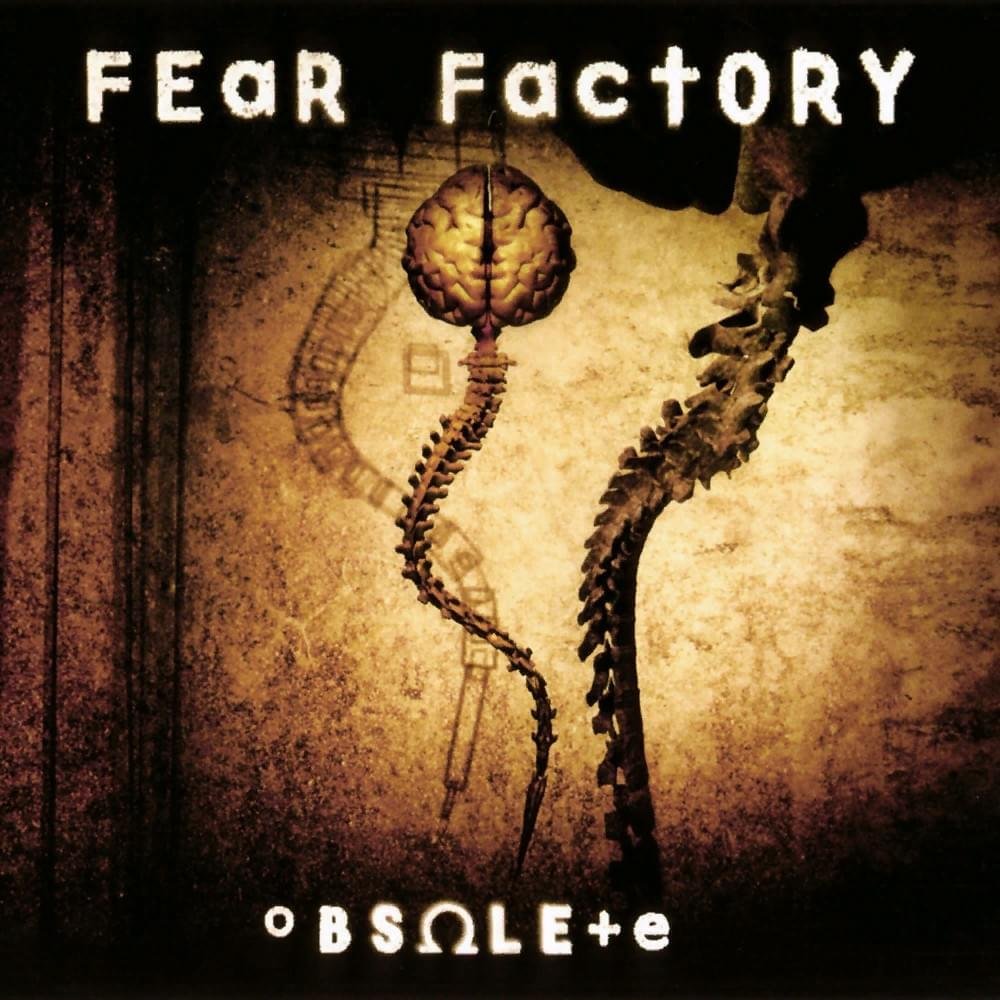
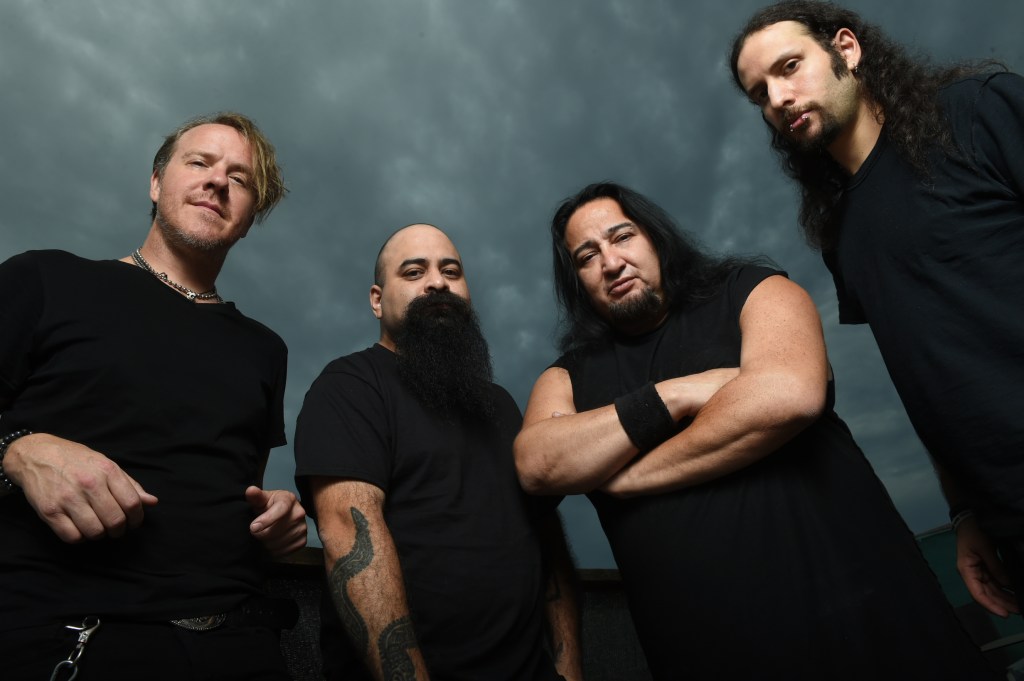
Good Morning to you – it’s Jacob Braybrooke here, and it’s time for your weekly Scuzz Sundays throwback – the time of the week where we mix it up with a re-evaluation of a Pop-Punk anthem from the late-1990’s up to the mid-2000’s. The LA-based US Heavy Metal band with no original members left in it’s line-up, apart from guitarist Dino Cazares, the million-selling band Fear Factory were highly influential on the global Metal scene in the mid-to-late 1990’s for the Groove Metal and the Industrial Metal sub-genres. Of course, their line-up woes haven’t really stopped them, despite a legal dispute between the original members and the current members over it’s legitimacy in a battle – with two albums still being released after the case was opened. ‘Cars’ was originally performed by Gary Numan in 1979, and Fear Factory would perform a cover of ‘Cars’ as an encore for their live tours. Then-frontman, Burton C. Bell, eventually got in touch with Numan’s management after word spread, who flew Numan out to the Vancouver studio for a three-day span to record a Spoken Word piece for the introduction of ‘Obsolete’, the associated album that ‘Cars – Remix’ was conceived for, in 1998. In this rendition, Numan performs a duet with Bell on the track. It was crucial in catapulting Fear Factory to attention in the mainstream eye, and it led to ‘Obsolete’ becoming Fear Factory’s highest-selling album, with over 750,000 units shifted, as of 2001. It also landed a place at #16 on the Mainstream Rock chart in the US. Let’s revisit the Stanley Kubrick-esque Sci-Fi music video down below.

“There was a chance that it could introduce me to a new generation of people who didn’t know my history” said the super-cult UK Synth-Pop spearhead Gary Numan, who originally felt apprehensive about working with Fear Factory at the time, because he perceived it as dated music. It proved to be a fruitful collaboration, with Numan telling the press: “And that can be useful, because my music’s got a lot heavier and darker anyway”, in the same interview. He also said the band were “brilliant, really easy to work with. They didn’t have a bad word to say about anyone” after recording the reworking of ‘Cars’ with them. It served to bring both parties to audiences that were wider than their fan followings, as the uncharacteristically bright Synth-led rendition contrasts with the metal progressives reputation for fast-moving and grinding Metal music. However, you could argue that the heavy use of the synthesizer and the other harsh, electronic blueprints correspond with the qualities of the band’s Industrial roots. The electronics are powerful, with the familiarity of the original track giving room for the more chant-led vocals to breathe. “Here in my car, I feel safest of all, I can lock all my doors” and “Here in my car, When the image breaks down, Will you visit me, please” are delivered melodically, as propulsive guitar riffs and lengthy, sustained Synth chords keep the psychedelic atmosphere rolling along. The rest feels simple, with light Dance music elements that keep the Heavy metal roots from getting too aggressive, and it still sounds predominantly like an 80’s Pop record, when you come to really think of it. Some Industrial-like riffing comes into play, and the drums have a slightly increased edge to them, but most of the original framework of Numan’s retro production remain intact. Overall, I quite enjoyed my time with this. The tempo is nice and the sound never feels overly produced at any one time. However, I did feel the band were playing it safe to a point. Their cover, although involving Numan, doesn’t really stray too far from the formula of Numan’s original, and so it didn’t do anything to suprise me. For the most part, however, the fusion of the electronic Synth-Pop original and the slight edge to the Metal-infused elements are definitely worth a spin. It’s also funny to think that re-workings like this are coming back into fashion too, with the recent Paul McCartney reimagining and Moby’s ‘Reprise’ album allowing artists to put a twist on their original work. It’s holding up fairly well in the present day, for that reason, too. Overall, it’s not brilliant, but it was a fun switch-off cover that should still appeal to a sizeable pool of listeners.

That’s all for now! Tomorrow is Bank Holiday Monday, and so I’m going to take you back to 2005 with a rarity that fits neither ‘Way Back Wednesdays’ or ‘Scuzz Sundays’ in it’s theme – and so it should make for a refreshing change to my regular output. This single comes from Miles Tackett’s Funk collective project who covered The Mohawks ‘Champ’ in 2005 for the video game soundtrack of ‘Tony Hawk’s American Wasteland’ for the Gamecube, PS2, Nintendo DS and the original Xbox. If you really liked what you just read, why not follow the blog to get notified when every new daily post is up and why not like the Facebook page here?: https://www.facebook.com/OneTrackAtATime/

Way Back Wednesdays: Moby – “Porcelain”

I’d be horrified to hear what took place in his 2020 Quaran-Dreams. Let’s go Way Back!

Good Morning to you! My name is Jacob Braybrooke, and it’s time for me to get typing up for today’s track on the blog, just like always, because it’s still my day-to-day pleasure to write about a different piece of music every day! Moby’s ‘Reprise’ comes out on Friday, the 19th studio album release from the 90’s EDM cornerstone Richard Melville Hall, which features new reworkings of orchestral and acoustic variations of some of his favourite tracks with numerous guest artists joining him. The guest list includes Gregory Porter, Kris Kristofferson, Skylar Grey, Jim James and others. So, to coincide with the release of that project later this week, I thought it would be a great time to revisit the original version of Moby’s highest-charting single for ‘Way Back Wednesdays’, as it was certainly one of the sounds of the past that influenced the present. ‘Porcelain’ reached #5 on the UK Singles Chart following it’s release as a single in June 2000. One of the few tracks on his 1999 breakthrough ‘Play’ to feature his own vocals, Hall wrote ‘Porcelain’ as a rather melancholic electronic/classical blend of production with lyrics reflecting on the recent break-up of a relationship. The album would have been exposed absolutely everywhere back in the day, and I read an interesting statistic online that each track from the album has been used in a film, TV series or advert of some kind. Check out the Jonas Åkerlund-directed video below.

In addition to his career writing and producing music, Hall is also a notable Vegan who heavily supports humanitarian aid and animal rights programmes. He’s drawn a fair share of criticism over the decades for his political views and thee different stories in the press concerning him, but he was, before July 2020, the owner of Little Pine, a Vegan restaurant in Los Angeles, and the Circle V non-meat food festival. You can read more about his life and career in the two memoir books that he’s authored: 2016’s ‘Porcelain: A Memoir’ and 2019’s ‘Then It Fell Apart’. The title track of his first memoir was a very important release in bringing electronic music to the mainstream eye. From this, you can hear a chilling and emotional atmosphere of experiencing the vigorous emotions of an ideal romantic scenario never quite materializing, as lines like “I never meant to hurt you/I never meant to lie/So, this is goodbye?/This is goodbye” start by questioning the flaws of the situation, before a light call-and-response form of vocal affirms the decision and mutually agrees with it. Dreams is also a common theme of the lyrics, with the two verses starting with lyrics like “In my dreams I’m jealous all the time/When I wake, I’m going out of my mind” and “In my dreams, I’m dying all the time/Then I wake, it’s kaleidoscopic mind” as the fragile mood of the fluttering String sections, evoking a cinematic affair, gradually turn into a more soothing affair, with twinkling Piano melodies that are more melodic. There’s also a Trip-Hop influence that flows very nicely throughout the moods, with the distorted vocals of “To tell the truth, you’ve never wanted me” being dressed up in a very soft Hip-Hop breakbeat production that reminds me of Boards Of Canada or Joey Pecoraro, and a soulful backing vocal created through a sample that I believe goes “Hey, Woman, It’s alright, go on” that gets looped over the top of the techno evolutionary sounds, and this part just emphasizes the themes of the vocals and the simple points of the personal reflection being made. The track may have got a little over-exposed over the day, including it’s notable use in a scene of 2000’s ‘The Beach’, and so I can definitely see why you may have grown tired of it, and some of the more radio-friendly cuts on ‘Play’ may have perhaps been a little too close to comfort to his contemporaries of the time. However, I do certainly think that ‘Porcelain’ is a more interesting track than it possibly appears on the surface. A fragility can be felt in both the shaky vocal delivery and the wavering moods of the instrumentals within the piece, and it’s surprisingly varied in it’s sampling that evokes diverse genres. It’s also important to remind ourselves sometimes, as well, that it was a big hit and that it did cross over to the charts of the mainstream. I’m not particularly a huge fan of Moby emotionally, but I’ve always found him to be an interesting chap who has made some fascinating music, although the consistency of it’s quality hasn’t always landed with me every time. As for ‘Porcelain’, it was definitely an influential example of how to framework some fragility with sympathetic musicality, and it’s partially made by the rather understated, sublime vocal performance from Hall himself. It’s pretty beautiful.

Eons ago on the blog, we also looked at ‘Power Is Taken’ from Moby, a much more rave-oriented single that would eventually appear on last year’s album, ‘All Visible Objects’. If that sounds cool to you, why not give me a few views here?: https://onetrackatatime.home.blog/2020/03/07/todays-track-moby-power-is-taken/

That’s it for another throwback! As always, on Friday, we’re going to be sampling one of the weekend’s notable album releases. As for tomorrow, I’ve got some brand new music to share with you. It comes from an emerging Manchester-based indie rock singer-songwriter signed to Memphis Industries, where he will be releasing his forthcoming second LP, ‘Mircale’, next month. His 2019 debut album, ‘A Dream Is U’, garnered critical acclaim from global publications such as Uncut, Paste Magazine and The Line Of Best Fit. If you really liked what you just read, why not follow the blog to get notified when each new post is up and like the Facebook page here?: https://www.facebook.com/OneTrackAtATime

Way Back Wednesdays: The Lightning Seeds – “Pure”

I’m going to keep this pure – It’s one of my Dad’s favourite bands! Let’s go Way Back…

Good Morning to you! My name is Jacob Braybrooke, and it’s time for me to take a moment out of my deadline work-filled day for an in-depth look at one of the seminal sounds of the past that has influenced those of the present, because it’s always my day-to-day pleasure to write up about a different piece of music every day! For those of you who perhaps don’t listen to much music or radio, you would probably know The Lightning Seeds best from their work with comedian David Baddiel and presenter Frank Skinner on classic UK footie anthem ‘Three Lions’, which has reached the top of the UK Singles Chart on three different occasions since it’s release due to the World Cup. Up to that point, however, the then-emerging Liverpool indie trio experienced commercial success ahead of the Baggy Brit-Pop era of the 1990’s. Case in point is their debut single, ‘Pure’, which was the first track which vocalist Ian Broudie had “completely written and sung, ever” and it reached #16 on the UK Singles Chart. Not too shabby for a first effort, right? At the time, it was mostly a solo project for Broudie, who followed up on his first crossover chart hit with the release of his debut album, ‘Cloudcuckooland’, to US chart success in 1990. Let’s revisit the video for ‘Pure’ below.

It was only when 1994’s ‘Jollification’ was released when Broudie decided to expand his project of The Lightning Seeds to a full-fledged touring band, with the band’s most famous line-up joining him. Before signing to Epic Records, Broudie had his roots set in small Noise-Punk 70’s bands and became better known a producer rather than a musician, contributing to work for acts like Echo & The Bunnymen and The Fall, prior to embarking on the trip of The Lightning Seeds in 1989. ‘Pure’ saw Broudie spring to mainstream radio consciousness for the first time after the initial run of 200 copies of ‘Pure’ on physical formats proved too little for the demand. Mixing catchy pop hooks with a youthful, simple innocence, Broudie made a hit out of a happy pop tune with the appealing instrumentation. The chorus, and the refrain of “Don’t sell the dreams you should be keeping, Pure and simple every time” is very memorable and easy to relate to, with verses that are written from the viewpoint of a burgeoning relationship with the purest of sweet love sentiments, despite our narrator seeming to be in a little state of doubt where nothing seems impossible. His vocals are shaky and veering towards the nervous side, but they add solid effect to the overall performance, where the expressions of the vocals are, you’re going to hate me for this, pure and simple every time. Musically, we’re being treated to slightly psychedelic Horns, the gentle strumming of the bass guitar, and the three-note synth sequences that all do their job and don’t ever overstay their welcome. There’s not a great deal to it instrumentally, but the sum of it’s parts each play out nicely with a pretty, birdsong-like structure. It’s a very radio-friendly tune, but everything is tied together neatly, and there’s a nice twist to the upbeat mood where the lyrics become more of an ode to the beauty that never lasts. Sure, it’s one of my Dad’s rock tunes, but I’d take it over Coldplay any day.

That’s all for now – but I’ll be back tomorrow for more musical musings. Join me then for an in-depth look at some new music from one of Brit-Pop’s most promising modern inventors. The now-duo were formed in Sunderland in 2004, and have a brand new album out now on Memphis Industries. The band have been nominated for the Mercury Prize and, at times, have been joined by members of Maximo Park and The Futureheads in their line-up. If you really liked what you just read, why not follow the blog to get notified when every new daily post is up and why not like the Facebook page here?: https://www.facebook.com/OneTrackAtATime/

Way Back Wednesdays: The Charlatans – “The Only One I Know”

Toast would say Tim bloody Burgess, oh wait. That’s Ray Purchess. Let’s go way back!

Good Morning to you – My name is Jacob Braybrooke, and it’s time for me to get typing up for your daily track on the blog, as per usual, because it’s always my day-to-day pleasure to write up about a different piece of new music every day! Perhaps somewhat overplayed at the time, The Charlatans ‘The Only One I Know’ is certainly one of the sounds of the past that has influenced those of the present. It reached #9 in the UK Singles Chart, and it made Tim Burgess and Buds some important figures of the Madchester/Baggy ‘Indie’ era. Burgess has been a hero to many with his listening parties on Twitter ever since the start of the Covid-19 pandemic, and now that seems to be finally reaching a visible end, The Charlatans have announced a special 30th Anniversary Tour of the UK and Ireland for this December. Like many, the group are acknowledging that a year has been lost for them due to the pandemic, and they’ve amusingly crossed out the “30th” on the publicity poster and replaced it with a “31st” label. Titled the ‘A Head Full Of Ideas’ tour, an accompanying box-set will be made available, featuring five albums and an exclusive bonus single. Released from their 1990 debut album, ‘Some Friendly’, Tim Burgess wrote in his memoir ‘Telling Stories’ that ‘The Only One I Know’ sold over 250,000 copies. Let’s revisit the old single below.

One fun fact about ‘The Only One I Know’ is that it’s continued to be memorable, and so it was used for an advert campaign for Cadbury’s chocolate in 2010. Two years later, it was also used in the Marshall Lewy-directed indie film ‘California Solo’ starring Robert Carlyle. You may also be familiar with a Funk-styled cover version with vocals by Robbie Williams which appeared on Mark Ronson’s LP, ‘Version’, in 2007 – and so The Charlatans’ traditional set wind-downer is still never many miles away from mainstream media exposure. Built from some lyrics that were directly lifted from The Byrds’ 1967 track ‘Everybody’s Been Burned’ and a Hammand Organ Riff that is a nod to Deep Purple’s rendition of ‘Hush’ from 1968, ‘The Only One I Know’ is a surprisingly funky look at romantic interests in the music scene. The lyrics of “The only one I know/Never cries, never opens her eyes” and “The only one I know, Wide awake and then she’s away” seems to imply that a romantic interest is the only one that our narrator feels a logical intimacy with, although a direct meaning is never made abundantly clear. Lines like “Everybody’s been burned before” and “Everyone knows the pain” feel more conclusive, however, and so the vague sentiment of our vocalist expressing his feelings as a victim of unrequited love makes it relatable enough to us as listeners. The instrumentation is relatively upbeat, with a frequent set of funk-inficted guitar licks and a highly baggy groove giving it a lick of danceability. The memorable, off-kilter keys riffs gives it just enough of a Garage beat to make things appeal to DJ’s, and so the crossover appeal feels welcome. The vocals and general production sound a little unpolished, with a slight DIY aesthetic that reminds me of the 60’s counter cultural sound that The Cribs explored on their latest album. The brief interlude towards the end provides for a “Pure Pop Moment” and the more dance-oriented coat of paint to the overall package makes it stand out among the likes of Ocean Colour Scene or Ash nicely enough. The sound is admittedly a bit commercial, and it’s definitely something that my least favourite radio station, Radio X, might overplay to the death like they do with Oasis or The Killers (or Noel or Liam Gallagher after playing Oasis), but, that little pet hate of an observation aside, it’s not a knock on the credibility of The Charlatans on the whole. Overall, it’s still a pleasant, solid track that sounds fresh enough for it’s time, and it crosses over to casuals nicely.

That’s all for another week! – Time is flying past and I hope that it stops doing so because I’ve got important deadlines for my Masters degree to complete, you know. However, join me back here in roughly 24 hours time for some more brand new music, this time coming from an emerging indie Dream Rock trio from the sleepy town of Fleet, Hampshire. Signed to Fiction Records, the group were childhood friends who met at college in nearby Farnborough, bonding due to their love of 90’s Trip-Hop. They’ve made the ‘Hype List’ of Dork for 2021. If you really liked what you just read, why not follow the blog to get notified when every new daily post is up and why not like the Facebook page here?: https://www.facebook.com/OneTrackAtATime/