Christmas Eve Special: Run-D.M.C. – “Christmas In Hollis”

The 80’s Hip-Hop carol that put the ‘W-Rapping’ on the presents! It’s Christmas Eve…

Y’all feeling festive yet? Good Morning to you, my name is Jacob Braybrooke, and it’s time for me to get typing up on the blog all about your latest track on the daily blog, because it is always my day-to-day pleasure to get writing up about a different piece of music every day! We’re heading across to the States today – for an in-depth look back at “Christmas In Hollis”, released by the illustrious hip-hop trio Run DMC, back in 1987, in the hopes of getting you warmed up for a very different Christmas tomorrow. Hip-Hop isn’t really a genre that’s commonly associated with Christmas music, so let’s make it different – right? The track was released as the lead single of a compilation album of Christmas-themed Hip-Hop music, “A Very Special Christmas”, which hit shop shelves in October of 1987, before it was made available as a standalone single release in November, as the popularity and demand of the track was much higher than expected. You can also find it as a bonus track on the deluxe edition of their 1988 LP, “Tougher Than Leather”, and on the “Christmas Rap” compilation LP. It was produced by the trio, along with Rick Rubin, to benefit the Special Olympics as a charity single, and it takes influence from the trio’s childhood, of which they grew up with in Hollis – a neighborhood in New York City known as Queens, which is notable for having a particularly large community of African-Americans. Let’s stream it below.

Run DMC always strike me as the influential group to be the first who really highlighted the significance of the relationship between the MC and the DJ partnership commonly associated with Hip-Hop music, as well as the first to break barriers in the ways that African-American artists were treated on-screen and behind-the-scenes in the music industry, and this must be a great implication as to why they were voted as The Greatest Hip-Hop group of all-time by MTV in 2007 – as well as becoming the second Hip-Hop group to be inducted into the Rock and Roll Hall Of Fame in 2009. “Christmas In Hollis” is no different – with the trio spitting some smooth bars to emphasize their cultural, historical and artistic significance, despite it being condensed into a festive format which feels commercially viable, yet fun and – dare I say – cheesy. A smoky Jazz-infused trumpet opening leads to a fast verse, where Mitzel raps: “I picked the Wallet up, then I took a pause/Took out the license and it cold said Santa Claus” to tell a narrative of a Santa mishap. It’s adorned with fun Seasonal samples of traditional Christmas carols and festive Sleigh Bell melodies, before Daniels chips in for the next verse, by rapping: “It’s Christmas time in Hollis, queens” and “The rhymes you hear, are the rhymes of Daryl/But each and every year we bust Christmas carols” before short and snappy samples that layer traditional Carol sounds together as we build back to the Jazz-influenced rhythms of Run DMC’s rap sounds. The three come together for a final, hook-led chorus, as they exclaim: “So, open your ears and lend us an ear/We want to say/Merry Christmas and a Happy New Year” over the top of a proud, explosive Saxophone melody. The vocals are confident, and the short duration of the track allows for a decent amount of depth to be spreaded across the course of the three minutes of running time. Overall, this is a track that’s gone down as a modern classic of alternative Christmas tunes, and I think the fun sample work and the thick Jazz interludes both hold up nicely to this day. I think the reason why it works for both the mainstream and the more music-obsessed is because Run DMC manage to reflect their personality as artists throughout the quirky track, as well as expressing a good affinity for the Festive track format that are attractive to the more casual ears. Unique and cheesy – both in the best way possible.

Thank you for checking out my Christmas Eve special for this year! Hopefully, you enjoyed seeing me seek out the track, and you’ll be willing to come back for some more festive cheer tomorrow, and the second part of my unique and different trilogy of seasonal songs over the period. Tomorrow’s track comes from a style which I wouldn’t typically roll with – here on the blog. It comes from an artist who… You know, I’ve been working on it for a weekend or so now, and so I just won’t spoil anything for you. Come back tomorrow and you’ll find out where this is going. If you really liked what you just read, why not follow the blog to get notified when every new daily post is up and why not like the Facebook page here?: https://www.facebook.com/OneTrackAtATime/

Today’s Track: Fugazi – “Burning Too” (1989)

Affordable live gigs for all ages – Now, those were the days… It is time for a new post!

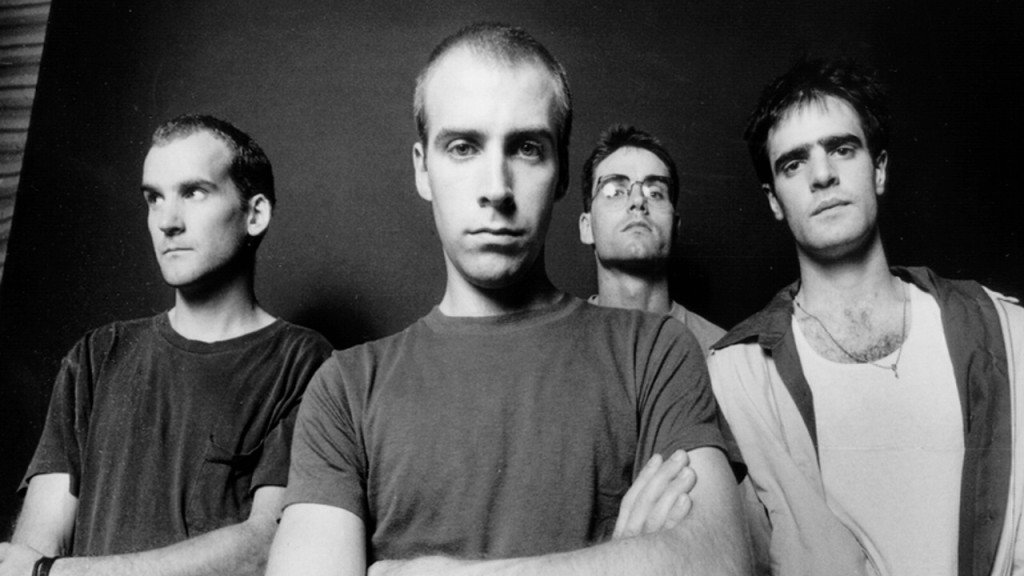
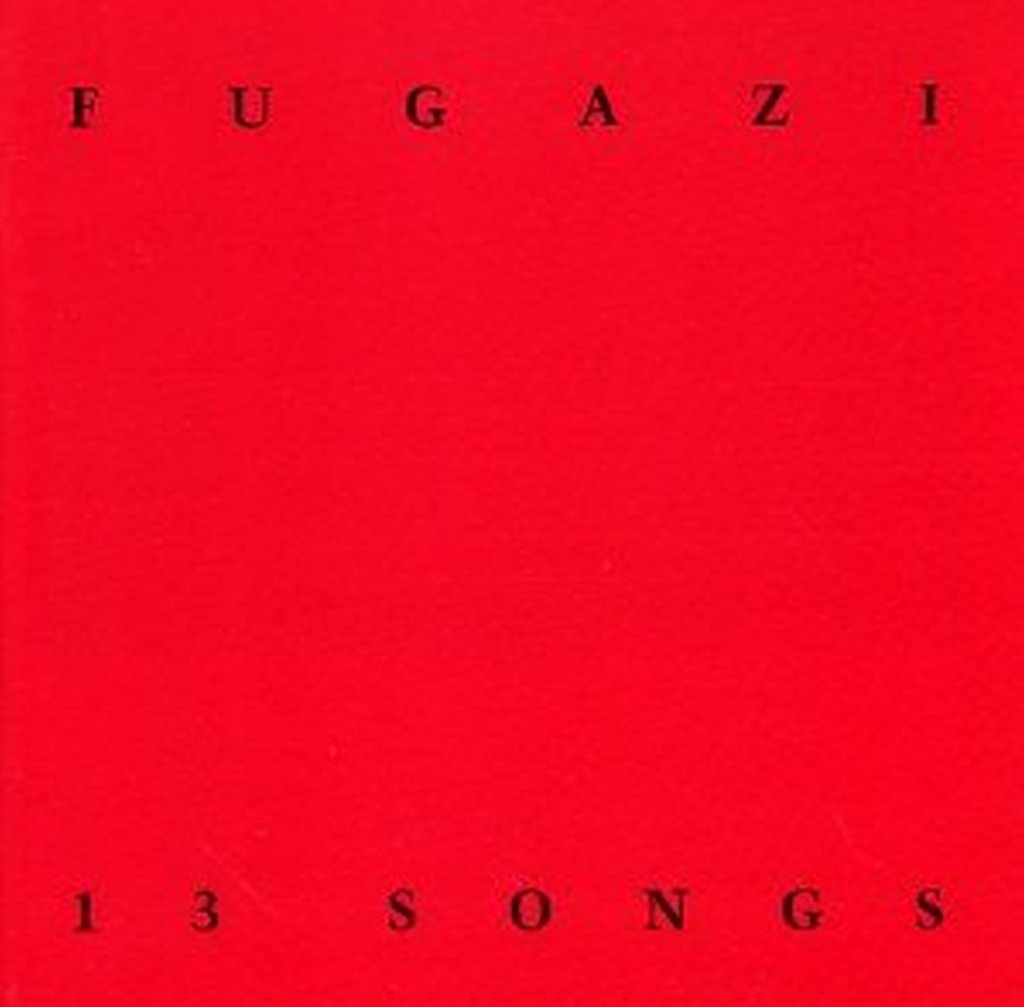
Good Morning to you! My name is Jacob Braybrooke and, just like usual, I’m here to type up all about today’s track on the blog, since it’s always my day-to-day pleasure to write up about a different piece of music every day! I’ve got a “Golden Track” in store for you today to get your weekend started, as we’re taking a look at “Burning Too” from the early discography of the Cult favourite Post-Punk group, Fugazi. The track was released way back in 1989 as part of the “13 Songs” mixtape, a compilation of previously released work from their EP’s and Demo tapes prior to the band’s six albums later on. The band were formed in Washington, DC in 1986 by lead guitarist and vocalist Ian MacKaye – also including multi-instrumentalist Guy Picciotto, bassist Joe Lally, and drummer Brendan Canty. The band were a huge influence on the likes of Lorde, Bloc Party and Paramore, and despite taking an indefinite hiatus in 2003, Fugazi still managed to tour around the world and achieve a wealth of both critical and commercial success. As well as being noticed for their DIY-transcending style of Post-Hardcore music, Fugazi have also been held up over the decades for their ethical management practices. They were firmly rooted in Anti-Commercialism, and they would always offer the likes of low record and low ticket prices for their fans, and they allowed all ages of people to attend their concerts with affordable access, and were also significant for the live videos they used to release, allowing their own artistry documentation to be open to their fans. Dischord Records was the label that they used to release their self-produced material on. Take a listen to “Burning Too” below.

Fugazi were never ones to be reclusive from their fans, and they were well-known for their progressive political perspectives too, with MacKaye telling Loud & Quiet in an interview: “I was like ‘Where’s the counter-culture?, it seemed so real to me as a child, but as a teenager it was gone” in a response to the Anti-War practices and lack of LGBT support in his upbringing. Albeit a compilation, “13 Songs” has sold over 3 million copies worldwide. It’s the forward-thinking songwriting strategies that MacKaye used and the ethical practices of the band that have made them a very influential name, and the small nuances of their work, within and outside of, recorded material that come together on “Burning Too”, a track with a balanced drive and flavour. The lyricism ultimately feels quite cryptic and provocative, with hooks like: “Anytime but now/Anywhere but here/Anyone but me” that reflect a seeking of identity, all the while that MacKaye and Piccioto are engaged in a vocally interlocked duel. These were recorded over the top of “Indie” guitar sounds and dissonant drum beats that feel rooted in DIY production, giving off the raw and unpolished feel of the textures. While the first half of the track are suggesting personal lyrical themes, the next half are much more driven by politics and very unified action, as MacKaye and Piccioto deliver: “We have a responsibility/To use our abilities to keep this place alive” and “Right here, right now/Do it”, calling for physicality to the sound of “Do it. NOW. Do it” as a cascading bass guitar riff lurks in, and the simple tonal textures join the fray. It obviously doesn’t sound massively produced, but I feel that adds a charm to their ethical messages, and we owe appreciation to their influence on the industry.

Thank you for reading my new post! Scuzz Sunday is back in two days time, but, in the meantime – please check back in with me again tomorrow for an in-depth look at the collaborative new single from a very established British Synthpop group who have Grammy Award and Mercury Prize nominations, as well as critical acclaim and commercial success, to their belt – Who have teamed up with the former frontman of the 90’s group, Pulp! If you really liked what you just read, why not follow the blog to get notified when every new daily post is up and why not like the Facebook page here?: https://www.facebook.com/OneTrackAtATime/
Halloween Special 2020: Rockwell – “Somebody’s Watching Me”

Why did the Ghost walk into the pub? For the Boo’s. It’s time for your Halloween post!

Spooky Dooky! I’m Jacob “The Howling Beast” Braybrooke, and I felt obliged to write your new daily blog post about something at least loosely related to the holiday formerly known as All Hallows Eve, because it’s always my day-to-day pleasure to write up about a different piece of music every day! If I’m honest with you, I’m an Ebeneezer Scrooge when it comes to Halloween. For one thing, what actually is it that we are even celebrating? For another, it’s not exactly like we’re able to dress up in silly costumes and go to parties, or beg strangers for sweets at their doorstep, in the first place, this year really. However, at the very least, it does give us the chance to take an in-depth look at a fun track that we can associate with all things Spooky Dooky. It’s a track that many people often mistakenly believe was performed by Michael Jackson. I give you – Rockwell’s “Somebody’s Watching Me” from 1984. This track was a Paranoia-themed radio hit that managed to reach #6 in the UK Top 40 Singles Chart. It was released on the world-renowned Motown label, and it was the lead single from Rockwell’s debut studio album of the exact same title. People often believe the track was credited solely to “The King Of Pop” because of vocal similarities to Rockwell – and Rockwell is the alias of Kennedy William Gordy, who is the son of Motown CEO and founder Berry Gordy. Kennedy was close friends with the Jackson family when he was growing up in the music industry, and so he enlisted the aid of Michael and Jermaine Jackson to perform backing vocals on the track. So, it’s technically true that Michael Jackson was a credited performer on the track – However, he is not the main credited artist to it. Ironically, let’s watch Rockwell perform his global radio hit below.

“Somebody’s Watching Me” also made a very memorable appearance in the Pilot episode of US crime drama TV staple “Miami Vice”, where undercover police officer “Rico” Tubbs performs a striptease routine to it in a nightclub. As you can see from the Twilight Zone-inspired music video, the track had a decent impact on popular culture of it’s time in the 80’s. It turned out to be a one-hit wonder for Gordy though, unfortunately, and so you could say it’s a pity that nobody was listening to him, rather than watching him. Musically, it’s a punchy and humorous take on the 80’s-Schlock B-movie horror film in mainstream pop music form, with Gordy fearfully crooning: “I’m just an average man with an average life” and “I just want to be left alone, in my average home” with a delightfully screeched delivery. Jackson comes in on the chorus, singing: “I always feel like somebody’s watching me” and Gordy chimes in with “And I have no privacy” and “Who’s playing tricks on me” on top of a catchy Synth-Funk instrumental with a tinge of polished New-Wave guitar riffs. A few cascading backing vocal effects are present in the chorus, and the breakdown sees further questioning of paranoia for Gordy when he sings: “When I’m in the shower/I’m afraid to wash my hair” and “But, can people see me on the TV, or am I just paranoid” with a bizarrely old-English sounding accent, over the top of the jovial toy keyboard notes and the tingling little Synth riffs that permeate through the track on top of a typical two-step drum beat. There is a very clear emphasis on the Rock instrumentals for the song’s instrumental backing beat, but the very contemporary 80’s synth and keyboard combination is done quite well. The lyrics perhaps don’t show a lot of progression in the narrative, but the chorus is catchy and memorable. I think that most people would probably agree that Rockwell’s abilities were limited, but it’s still a fun novelty single that was nudged towards the public eye (or ear) by the guest inclusion from one of the world’s most instantly recognizable voices in music. It also shows how far surveillance has come in a way. It’s charming and good enough for me.

Thank you for reading my melodically devilish new blog post! I’ll be back tomorrow with another special post – as it marks the time for a new entry in our Scuzz Sunday series, where we dig out an ancient relic of the Emo-Rock or Pop-Punk genres, from between the late-1990’s until the mid-2000’s. Let me tell you – It may just be The Best Song In The World! If you really liked what you just read, why not follow the blog to get notified when every new daily post is up and why not like the Facebook page here?: https://www.facebook.com/OneTrackAtATime/
Today’s Track: Severed Heads – “All Saints Day (2015 USA Tour)”

Basement Jazz would ask: Where’s Your (Severed) Head At? It’s time for a new post…

Good Morning, I’m Jacob Braybrooke and I am writing about your daily track on the blog because, as like always, it is my day-to-day pleasure to write about a different piece of music every day! “All Saints Day” has always gone down as a cult classic, from what I gather. It’s probably because of my age, but I just saw this track listed on the KEXP schedule, and I thought the artwork looked really amusing, but I’ve never actually listened to this record. So, it’s going to be as much as a new experience for you as it will be for me, for today. According to my research, this is one of the most popular tracks to ever be performed by Severed Heads, a cult favourite Australian Experimental Electronic Prog-House group, which has seen several line-up changes throughout the years. This track was taken from their eighth LP record, “Rotund For Success”, released in 1989. As with the bulk of the group’s discography, the album has been reissued several times over the years by different labels, in different formats and versions. This late-80’s iteration of the duo saw Tom Ellard work with Stephen Jones on Synths and Production, but the current line-up sees Jones getting replaced by Stewart Lawler on Engineering and Percussion. In any case, Severed Heads has become known for their off-kilter style of production, experimental pop-driven hooks, and twisted splicing effects. Let’s listen to their 2015 USA Tour dub of the track below.

With the history of Severed Heads in their career seeming almost as strange as the highly experimental, IDM-driven style of their music, “All Saints Day” incorporates a House-laden melodicism into a harsh, although not abrasive, electronic synth bassline and a groovy, but slightly distorted, snare effect. It often feels like some kind of “Wrong” or “Broken” auto-tune machine, with Cymbal samples being looped backwards and delayed pedal effects making the club-rolling dancefloor House beats sounding a little bit sideways. There is enough of a melodic Synthpop element to the track though, with a trendy late-80’s synth-oriented club sound and spoken word vocals that often feel comparable to Pet Shop Boys or Bernard Summer. The smooth synth-rock development replaces a grating percussion sample, sounding like a door loudly creaking, from the opening. The vocals flutter above a Disco-Rock layering, going: “For I am willing to believe/Wishing to be strong, Fighting on your side”, over the top of curiously appealing, monstrous vocal samples and the brassy, prominent Synth-Strobe stabs. An unintelligible female vocal loop, a manipulated jumble of celestial Drum blips, and an ethnological, almost tribal, backing vocal loop compete against each other in the bizzare cloud of experimentation. It’s very off-kilter, but it’s well-paced throughout and feels fairly cohesive, but it’s wonky enough to add a touch of charm and warmth. It somewhat feels like a product of it’s time, with innovative 80’s synth stabs and hefty use of the Analogue synth hardware that was new and exciting in it’s heyday, but it also feels very intentionally off-kilter and appealingly unstable enough to have a timeless effect. If it came out tomorrow, I don’t think that anybody would question it much, but you could point directly to its influence. To conclude, it does have “me” written all over it judging by my own personal tastes, and I think this is a really cool tune. I would love to see a revival of this niche dance scene.

Thank you very much for reading my daily music blog post! As per usual, I will be back tomorrow with your new weekly edition of Scuzz Sundays, the feature where I pick an Emo-Rock or a Pop-Punk relic from between the late-90’s and the mid-00’s to see if it can hold a candle to modern standards! If you are a fan of Burnout Paradise, the classic racer video game from 2008, you’ll be in for a blast from the past tomorrow, so make sure you don’t miss out on it! If you really liked what you just read, why not follow the blog to get notified when every new daily post is up and why not like the Facebook page here?: https://www.facebook.com/OneTrackAtATime/

Today’s Track: The Cocteau Twins – “Lorelei”

As if Double Trouble wasn’t enough, this band has Triple the Trouble! New Post Time!

Good Morning to you on this unpleasantly warm weekend, I’m Jacob Braybrooke and I’m writing about your first daily track on the blog of the new month, since it’s always my routinely day-to-day pleasure to write about a different piece of music every day! Yes, even on my Mother’s birthday (Happy birthday, I know you’re about the only one reading this…)! Here’s a classic for you… The Cocteau Twins! A Scottish Art-Rock trio who were one of the biggest pioneers of Dream-Pop and Shoegaze in the 80’s and 90’s comprised of vocalist Elizabeth Fraser, producer James Guthrie and bassist Simon Raymonde, The Cocteau Twins were a very hot commodity for 4AD, which is still one of the most successful indie music labels to this very day, housing popular current acts like The National and Future Islands. “Lorelei” was taken from Cocteau Twins’ third full-length album release, “Treasure”, the first of which to feature the band’s famous primary line-up. The sound of the record established the group’s sound development in very ethereal, downbeat moods. Some of the lyrics from the album were conceived as unrecognisable, and the dark synth instrumentation hid some intricate, melodic lines that helped them to capture the hearts of the millions, despite the LP really not being a mainstream, or accessible, release by any stretch of the imagination. It was critically acclaimed, and it’s considered to be the band’s finest work by a large portion of their fanbase, although the band themselves have reflected upon the album’s quality as “under-developed” in later interviews, which truly shows their dedication to their own craft. Let’s have a listen to their track – “Lorelei” – below.

Named after the legend of a siren that lures fishermen to their deaths upon the “Lorelei” rock, which exists in the Rhine River near Sankt Goarhausen in Germany, Cocteau Twins’ make sure the lyrics are difficult to understand, but the point is the lack of matter that it has. Fraser whirs: “Can’t look out, Can’t look in, you just might, get yourself kissed right” over a high-pitched bass guitar riff and delayed pedal effects that create a smooth and relaxing backdrop for the lo-fi indie rock beats to flourish. An emotional bridge: “We’re covered by the sacred fire/Then you cut me to, you cut me to the bone” glides along earthly moods and fantastical tones evoked by a calming synth buzz and an accentual swoop of whimsical lyricism. Fraser recites: “and we can go” above a pounding rhythm of delayed guitar licks, while the impending surge of guitar riffs add a harmonious melody to the dream-like personality. It’s a track that’s near-impossible to praise enough. The female vocals are tricky to understand, but they significantly add to the soft, introspective qualities by adding a honeyed, loving angelic feeling to it. You just don’t need to hear a polished section of clear vocals to feel the mood that it conveys. In a nutshell – it’s marvellous!

Thank you very much for reading this post! I’ll be back tomorrow, as usual, with your new weekly edition of our Scuzz Sunday series. It’s the time of the week where we revisit an Emo-Rock or a Pop-Punk classic from between the late-1990’s until the mid-2000’s to see if it can live up to quality in the present! It’s a celebration of the defunct Scuzz TV freeview music video channel. If you really liked what you just read, why not follow the blog to get notified when each new post is up and like the Facebook page here?: https://www.facebook.com/OneTrackAtATime

Bank Holiday Monday Special: The Stone Roses – “I Am The Resurrection”

Roses are red, Violets are blue, It’s bank holiday – I’ve got a special blog post for you!

It’s Bank Holiday! I’m Jacob Braybrooke and I’m typing up your daily post on the blog because it’s my day-to-day pleasure to write about a different piece of music every day! “I Am The Resurrection” is the closer track of The Stone Roses’ self-titled debut album, which was released in 1989. “I Am The Resurrection” was also the second of two singles which estranged the band from Silvertone, their original record label. The self-titled debut album was only initially a cult success, but it grew popular over time with the group’s energetic live performances. Eventually, it has sold over four million copies worldwide and several critics have voted it highly in “Best Album” lists and polls. A significant development in the “Madchester” indie rock movement, The Stone Roses have built up a storied legacy throughout the decades since their formation, despite only actually having two full records to their name. Disagreements between the group, line-up changes and eventual public indifference, despite a maintained popularity, has also led to several on-and-off reunion tours and rumors concerning production of new music circling around between these tours, although it’s not come to pass. Let’s take a listen back at the 8-minute classic “I Am The Resurrection” below.

Running for a hefty 8-minute long duration, “I Am The Resurrection” is split into a familiar indie rock structure for it’s first four minutes, and then an instrumental outro-ballad for it’s second 4-minute half. Ian Brown sings: “Don’t waste your words, I don’t need anything from you/I don’t care where you’ve been or what you plan to do”, layered on the top of urgent drumming chords and jangling guitar rhythms. A somewhat poppy hook is created when Brown chimes in with: “I am the resurrection and I am the life/I couldn’t bring myself to hate you as I’d like”, a lyrical melody that feels displaced with a sense of arrogance and a quality of renewal. After this call, the chords progress to an instrumental ballad, which demands for your full attention, with free-form guitar solos and licked bass guitar riffs which are impactful in connecting with the damaged youth as a slight pre-cursor to the “British Big Beat Boom” of The Prodigy and The Chemical Brothers during the mid 1990’s. Throughout the long section, the tone wavers between light, acoustic melodies and darker textures created by the more rough-edged, electronic instrumentation. The end of the section sounds like an effective lo-fi fusion of Brit-Rock and Electronic Dance, with a noticeable Funk inspiration heard by the Bongos at the end and the warmth of the light rhythm guitar strums. “Fool’s Gold” is still my personal favourite Stone Roses’ track due to it’s sampling legacy, but “I Am The Resurrection” is also an indelible classic – one that holds up above the brand-like nature of ‘Indie’ in the modern times.

Thank you for reading this post! In these current circumstances – I ask that you please stay safe inside, don’t do anything silly and you keep on washing those hands! Since the weather’s been hot lately, I’m going to whisk you away to the warm beaches of Jamaica tomorrow with a 1960’s Rocksteady classic track from a Reggae staple who still releases music today. As of 2019, his music has been featured on over 20 compilation releases. If you really liked what you just read, why not follow the blog to get notified when every new daily post is up and why not like the Facebook page here?: https://www.facebook.com/OneTrackAtATime/

Today’s Track: Ryuichi Sakamoto – “Riot In Lagos”

Kaiser Chiefs would never be able to Predict a Riot in Lagos! It’s time for a new post…

Good morning, I’m Jacob Braybrooke and I’m writing about your daily track on the blog, as it’s my day-to-day pleasure to write about a different piece of music each day! I’ve been listening to a LOT of American radio lately, as a way of broadening my horizons and exploring interesting music beyond the UK’s bubble. I was rather surprised to find that I’d never heard of Ryuichi Sakamoto, a Japanese electronic composer, prior to hearing “We Love You” being played in the early hours on KEXP, a Washington-based Community radio station. From co-founding Yellow Magic Orchestra in the late 1970’s to scoring the Oscar darling film “The Revenant” in 2015, the guy’s done a lot. My favourite release is “Riot In Lagos”, a funky track that was self-produced by Sakamoto for his second solo album “B-2 Unit” in 1980. For “B-2 Unit”, Sakamoto decided to ditch the compositional pop style of Yellow Magic Orchestra to explore his interest in ambient textures and tones rather than using Yellow Magic Orchestra’s more traditionally packaged-up formula. Check out “Riot In Lagos” below.

You could argue that nothing else really sounded like “Riot In Lagos” in the 1980’s and, in 2020, not much has changed at all because barely anything still does. This strange and experimental electro-dance record establishes a very futuristic aesthetic through it’s propulsive acid-house interludes and it’s restless, skittering breakbeat sections that make up the bulk of the verses. There’s no lyrics to speak of, but the abstract nature of the bustling, oriental techno-bleeps and an intriguing, uniquely post-modern take on the broad classical music genre, provides us with the result of a very timeless and sophisticated backdrop to the combination of an African dancehall-like energy and a more densely layered, science-fiction based Ambient House soundscape. In a few ways, Ryuichi Sakamoto also draws on the grooves of Afrobeat in his focus of creating repetitively composed, propellant melodies that feel danceable, in transporting the G-Funk mannerisms of Fela Kuti to a filtered electronic setting. The results are strikingly effective, with a nostalgic video-game soundtrack linking up with a techno-modernist House sound that feels influential for the likes of Plaid and Autechre 10 years later, along with Four-Tet and Peggy Gou in slightly later times. Basically, it’s Funk music, but created by machines – Count me as a fan already.

Thank you for reading this post! As always, I’ll be back tomorrow with an in-depth look at the brand new single from an English songwriter originally signed to Rough Trade Records who is also the son of Ian Dury and he modeled on the front cover artwork of Ian Dury’s debut album “New Boots and Panties” released back in 1977! If you really liked what you just read, why not follow the blog to get notified when every daily new post is up and like the Facebook page here?: https://www.facebook.com/OneTrackAtATime/

Easter Monday Special: Jona Lewie – “You’ll Always Find Me In The Kitchen At Parties”

A joke from comedian Sanjeev Kholi to start: Where does Jona Lewie do his Christmas shopping? – Debenebenhamnams, Debenemenhams, Debenhamnams, Debenhams, Debenemanhams! Happy Bank Holiday weekend to you – It’s time for your daily post!

Have you eaten enough chocolate yet? I’m Jacob Braybrooke, it’s Easter Monday, and I’m writing about your daily track on the blog, as it’s my day-to-day pleasure to do so! This Bank Holiday Monday, we’re going to take a look at Jona Lewie, a Southampton-born rock singer-songwriter and multi-instrumentalist who is perhaps best known for his christmas classic, “Stop The Calvary”, which was released in 1980 to a lot of commercial success and it still receives plenty of airplay on the radio around the festive season each year. However, instead, we’re going to give one of his other tracks to spice things up a bit. After all, John Peel said: “The next record you play could be your favourite” and I LIVE BY THAT! It goes without saying that “You’ll Always Find Me In The Kitchen At Parties” also went down as a commercial hit, but it’s much more based around the Blues and New Wave genres than his Christmas Cracker. The single was taken from his “Bureaucrats” B-side, a double single release. The track reached #16 on the UK Singles Charts and it stayed on the chart for 11 weeks, but it actually found it’s greatest success in New Zealand, where it reached #3 in October 1980 and stayed on the chart for 17 weeks. The backing vocals were originally thought to be recorded by Kirsty MacColl, of “Fairytale Of New York” fame, but Lewie has since told us that they were recorded by the two wives of the co-owners of Stiff Records. But, MacColl would sing the backing vocals in live performances. Let’s have a listen below.

More or less seen as a one-hit wonder, Jona Lewie proves that he deserves a lot more recognition than that on “You’ll Always Find Me In The Kitchen At Parties”, a cerebral and methodical, Progressive Synth-Pop anthem that feels definitely early 1980’s. Delivered in a clear cut, dry talk-speech accent, Lewie warbles: “I’m no good at chatting up and always get rebuffed/Enough to drive a man to drink, I don’t do no washing up” over a studiously layered synth rhythm which stutters and washes over Lewie’s bemoaning of his bad luck with the ladies in a tuneful sense as the three-minute duration goes on. At a mid-way point, the synth lines breathe for a slick keyboard riff interlude, a short instrumental section that emphasizes on the humor of the lyrics, despite it’s barren, almost bleak, pitch. Lewie concludes: “At last I met a pretty girl, she laughed and talked with me/We both walked out of the kitchen and danced in a new way”, as the synthesized beats convey a more upbeat tone and the vocals seem a bit more melodic, though the production is still very minimalist. It sounds very alike to Ian Dury & The Blockheads in it’s tone and structure, with a smart and comedic, yet very alternative and calculated, sonic direction. The lyrics are cold, but the narration progresses to the vibe of an almost The Specials-esque British Ska-Reggae Skank, which adds a kinetic energy that makes the track feel melodic enough to count as a synth-pop record, although it feels slow-paced and a bit grim in a few ways. Overall, I think it’s all good fun, though. This track represents a wise level of individuality and intellectualism that has really been lost in pop music as the decades have gone on. If you’re lucky enough, you may find it playing in the kitchen at parties!

Thank you very much for reading this post! I hope you enjoyed it! It’s back to normal tomorrow as Easter Tuesday isn’t a thing, but as I’ve been writing about a lot of new music lately – we’ll look at a vintage delight instead! This track comes from an American 5-piece family group who began their own, monumental, sampling legacy with their fifth album, “There’s A Riot Going On”, released in 1971! If you really liked what you just read, why not follow the blog to get notified when each new post is up and like the Facebook page here?: https://www.facebook.com/OneTrackAtATime

New Year’s Day Special: ABBA – “Happy New Year”

Or as Jools Holland would say on his annual BBC 2 extravaganza, HOOTENANNY! A moderately sleep-deprived Jacob Braybrooke here, wishing you a very happy new year!

Well, I suppose it’s fair to say that this is, hands down, the best day of the year so far! The decade, even, in fact! “Happy New Year” by the legendary 1970’s pop vocal quartet ABBA is the best track we’ve covered on One Track At A Time all year around! Ok, enough with the New Year jokes! I’m going to write to you about ABBA to ring it in!

“Happy New Year” seems to be the closest ABBA have come to a full-fledged foray into Christmas music offerings. A vocal track from the golden age of early 80’s ABBA, the track was originally written as a track for a musical that was eventually scrapped as the screenwriter backed down. Lyrically, it references the end of the 1970’s and it tells the story of a relaxed aftermath to a New Year’s Eve’s party. Agnetha Fältskog opens proceedings: “No more champagne/And the fireworks are through/Here we are, me and you/Feeling lost and feeling blue”, before Anni-Frid “Frida” Lyngstad leads the chorus: “Happy New Year/May we all have a vision now and then/Of a world where every neighbour is a friend” and “Happy New Year/May we all have our hopes, our will to try/If we don’t we might as well lay down and die/You and I”, as the New Year’s Eve party draws to a standstill and it begins to momentarily meet it’s conclusion. When you read these lyrics written down on paper, they seem a bit melancholic and bleak. However, as you listen to the track, the track has much more light-hearted and optimistic qualities to it’s sound. The male harmonies from Benny Andersson and Björn Ulvaeus are noticeably absent, who provide the instrumentation on the track instead, which is mostly acoustic. It has up-tempo and light piano melodies and a taste of the Accordian from Ulvaeus. The music machine hadn’t come into fashion yet! Nevertheless, this is still the best song that I’ve heard all year round!

Thank you for reading this post! It’s been a long time since we’ve covered a Jamaican classic on the blog, so I’ll be helping you through the very weird day tomorrow with a slow and diverse Rocksteady classic that appeared on the “This Is Trogan – Rocksteady” compilation album box-set! If you really liked what you just read, why not follow the blog to get notified when every new daily post is up and why not like the Facebook page here?: https://www.facebook.com/OneTrackAtATime/

Today’s Track: Prince & The Revolution – “Raspberry Beret”

“If you don’t own your masters, your masters will own you”! That’s my favourite quote from the master of re-invigoration himself! It’s time for your Tuesday blog post!

The aforementioned quote is a true statement of Prince’s rebellious attitude and his pure dedication to actively creating good music which rebels against the established materialism of the chart-pop industry. He changed the face of music forever and there was a sense of pure horror in the air as he passed away from us on April 21, 2016. “Raspberry Beret” is a track from his 1985 album, “Around The World In A Day”, which he produced with The Revolution. The album saw Prince experiment with a more zany style, such as elements of psychedelic rock and opulent soul ballads. It was famously released with very little publicity, as requested by Prince, with none of the singles being released until after a month since the album’s release. It was still a massive commercial success, eventually reaching the #1 spot on many charts around the world (but it took more than a day) and eventually going double platinum, with audiences responding to the overall sound being more creative than previous record.

The track instantly starts with a “1-2-3-4!” chant before the funky synthpop beats work their way around the melodic vocal hook of the track. The track immediately engages the listener before, as with the rest of the album, it combines several different elements of multiple genres with solid precision. The track incorporates pop, punk, disco, neo-psychedelia and new wave, as it creates a world-infused, “international” effect by focusing on acoustic instrumentation, such as the violin string-based arrangement, as well as a Cello and a Harmonica being used in extended versions of the track. It tells a lyrical story of a teenage wash-up having a first-love encounter and a sexual experience with a girl wearing the titular “Raspberry Beret” hat. It’s simple and more in the pop vein than other, less-radio friendly, tracks from the album. However, it’s effect is still fairly original and effective. He starts: “I was working part-time in a five-and-dime/my boss was Mr. McGee”, which has a Bryan Adams-esque pop hook, and he continues to tell the story until the end, stating: “She wore a raspberry beret/the kind you find in a second hand store”, simply ending the chorus with: “I think I love her”. It’s a very colourful and vibrant track, with a sense of very sweet romanticism. It’s a good track, but the context behind it definiely brings it a step forward. After 1984’s “Purple Rain”, fans were expecting a sound that was heavier in a rock context and maybe a little bit more sexualised, but instead, he wrote material that was delicate and light-hearted, as he cleverly played around with his fans’ stereotypes and in a sense, their loyalty to following him as an artist. The risk paid off dividends, further asserting Prince as one of the all-time greats. We miss him!

Thank you very much for reading this post! I’ll be back tomorrow, as usual, with an in-depth look at an explosive techno-pop track from a new London indie group who once produced a cover version of a Carole king song by Elizabeth Price, although not explicitly admitting to doing so! If you really liked what you just read, why not follow the blog to get notified when every new daily post is up and why not like the Facebook page here?: https://www.facebook.com/OneTrackAtATime/